The elements of natural philosophy : copiously illustrated by familiar experiments and containing descriptions of instruments, with directions for using : designed for the use of schools and academies (1856)
Sprague, A. W. (Alfred White), 1821-1891 · Boston : Phillips, Sampson & Company · leaf 309
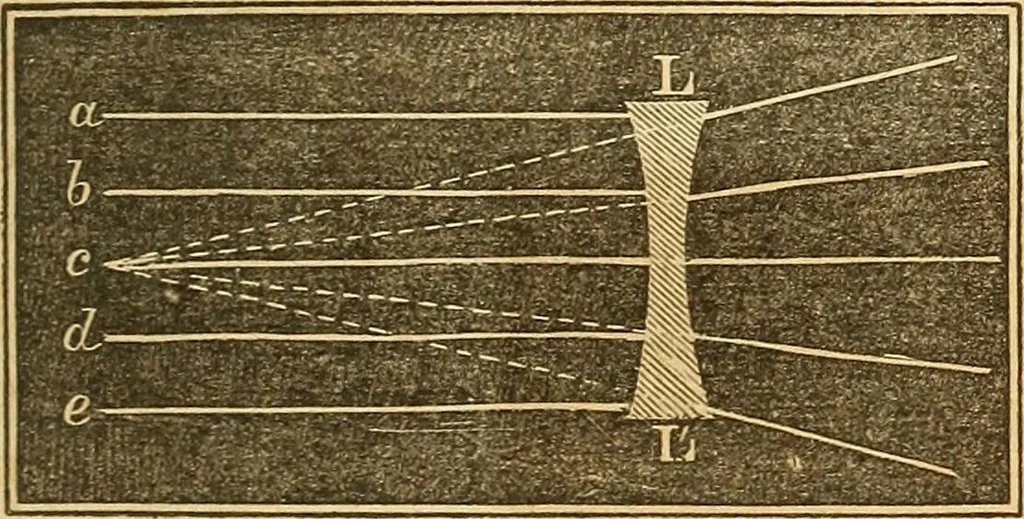
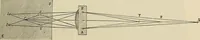
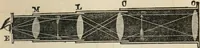
aversing the lens at different distances from the axis, istermed the spherical aberration of the lens. To avoid thisaberration in lenses employed for optical purposes, a meniscus(Fig. 240, C) is used with the double-convex lens, by whichthe rays are made to converge uniformly to a single point.… … L L, after passmg through this, aremade to diverge asthough proceedingfrom the point, c. Soconvergent rays arerendered less conver-gent, or even parallel. How will be the focus of diverging and converging rays incident on V L ?What is said of the rays traversing a double-convex lens ? How is the…
Physics
Internet Archive · Library of Congress · Public Domain Mark 1.0. Free to use for anything.