Elements of theoretical and descriptive astronomy, for the use of colleges and academies (1901)
White, Charles J · New York: J. Wiley & sons · leaf 133
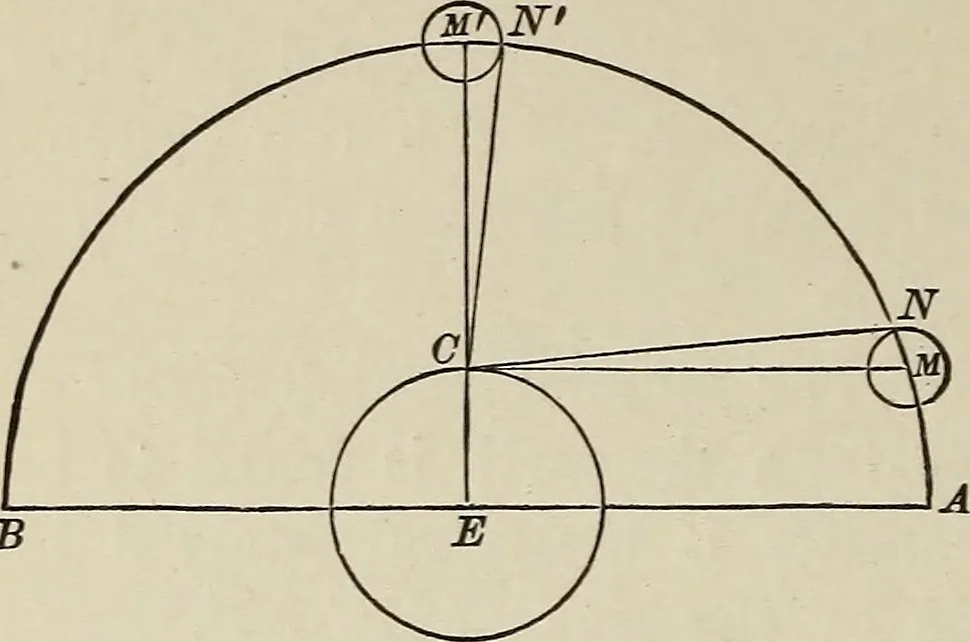
and in quadrature when theirlongitudes differ by either 90° or 270°. The moon is an opaque body, which is rendered visible tous by the rays of light which it reflects from the sun. Thephases of the moon are due to the different relative positionsto the sun and the earth which it has while revolving… … centre of the earth, andMthat of the moon. Withthe distance between E andM as a radius, describe the B Fig. 53. ,jy semi-circumference AMB.■% When the moon is in the\ horizon of the point C, itsdistances from C and fromE are very nearly equal.But as the moon rises, the THE MOONS PHASES. Ill \si:s.…
Astronomy
Internet Archive · Public Domain Mark 1.0. Free to use for anything.