Encyclopedia of architecture : a dictionary of the science and practice of architecture, building, carpentry, etc., from the earliest ages to the present time, forming a comprehensive work of reference for the use of architects, builders, carpenters, masons, engineers, students, professional men, and amateurs (1852)
Nicholson, Peter, 1765-1844, Lomax, Edward, Gunyon, Thomas · New York : Johnson, Fry & Co. · leaf 688
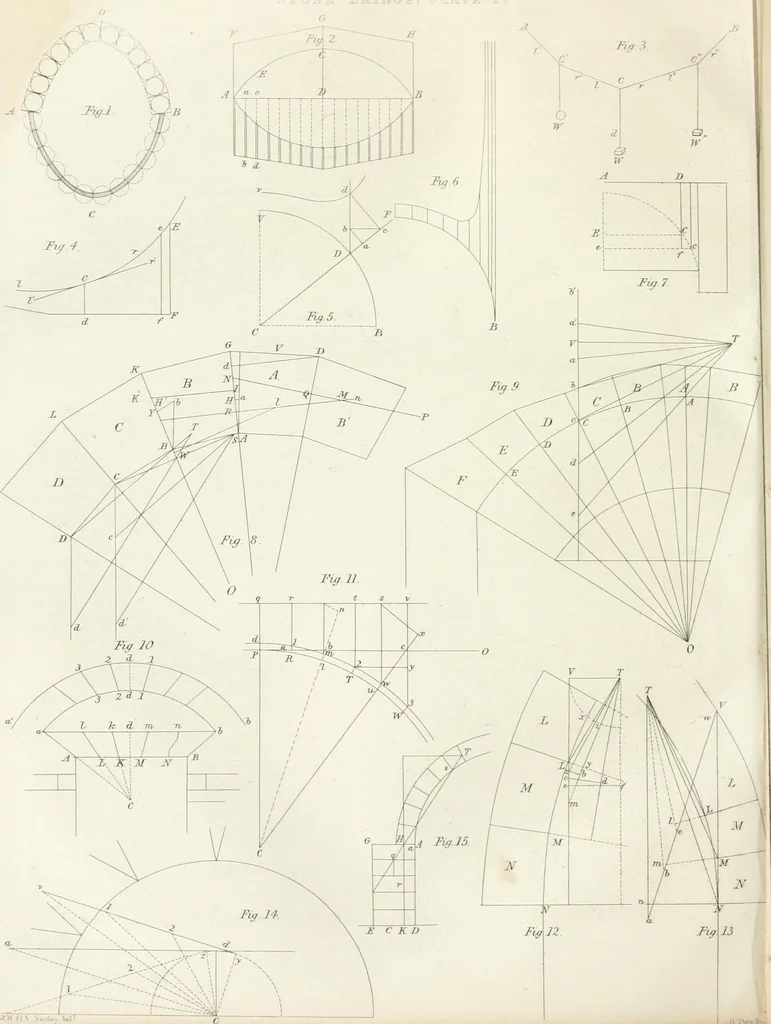
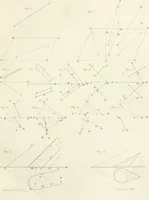
tion arising from the weight of thepier increases with its height. In order to find analytical expressions for these forces,let the horizontal thrust of the arch = t. The weight of thehalf arch = a, and that of the pier = p, the height of thepier to the springing of the arch = A, the breadth atthe… … a- / -, -. \ ^^^^ ^ 7---. J^^\ \ 1 \ • \ t/ jn H V .s«.iii.y.w^ / 2. The weight of the pier acts in the direction b c, andits eftect will be represented by multiplying it by theleverage c e, viz., p X ^ b. 3. The arch acts with the leverage e k, which is notequal to the breadth of the pier, by tlie…
Architecture · Architects
Internet Archive · Getty Research Institute · Public Domain Mark 1.0. Free to use for anything.