The fundamental principles of Old and New World civilizations : a comparative research based on a study of the ancient Mexican religious, sociological and calendrical systems (1901)
Nuttall, Zelia, 1858-1933 · Cambridge, Mass. : Peabody Museum of American Archaeology and Ethnology · leaf 170
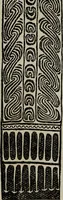
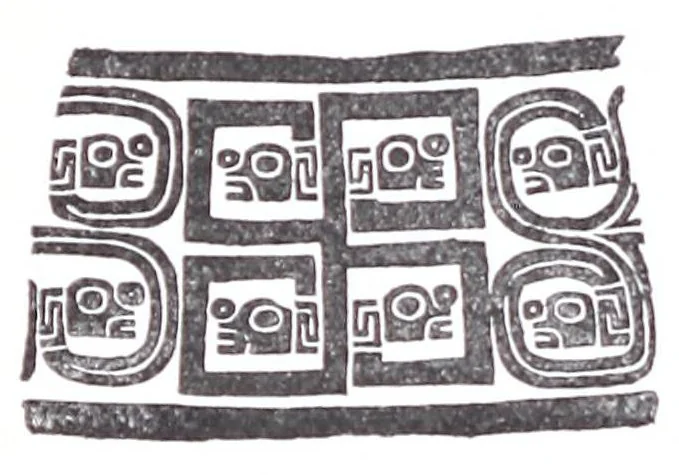
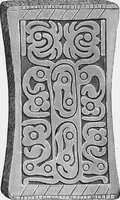
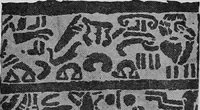
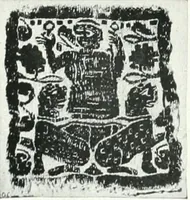
king upwards, are on the central decoration beneath the figure and the broad band at the base terminates in two large tigers’ heads. What is more, on the fragment of a finely carved hollow stone object, which is pre¬ served at the British Museum and was found at Tiahuanaco by Mr. Richard Inwards,… … carved fragment and for the per¬ mission to reproduce it here (fig. 49). The central swastika is angular and its form recalls that of the Mexican Calendar swastika (fig. 9). At each side of it are por¬ tions of what originally were two rounded swastikas, which also ter¬ minate in tigers’ heads.…
Civilization -- History · Mayas -- Antiquities · Calendar, Mexican · Mythology · Calendar · Swastikas
Internet Archive · Getty Research Institute · Public domain (published before 1931). Free to use for anything.

![An illustration from A treatise of the fovre degenerate sonnes, viz. the atheist, the idolater, the magician and the Jew. : wherein are handled many profitable questions concerning atheisme, witchcraft, idolatry and Iudaisme ... ; Being the fourth volume of the workes of Mr. Ioh. Weemse [i.e. Weemes] (1636)](https://img.insideoutlibrary.com/img/200/ia-treatiseoffovred00weem-192-16.webp)