The fundamental principles of Old and New World civilizations : a comparative research based on a study of the ancient Mexican religious, sociological and calendrical systems (1901)
Nuttall, Zelia, 1858-1933 · Cambridge, Mass. : Peabody Museum of American Archaeology and Ethnology · leaf 24
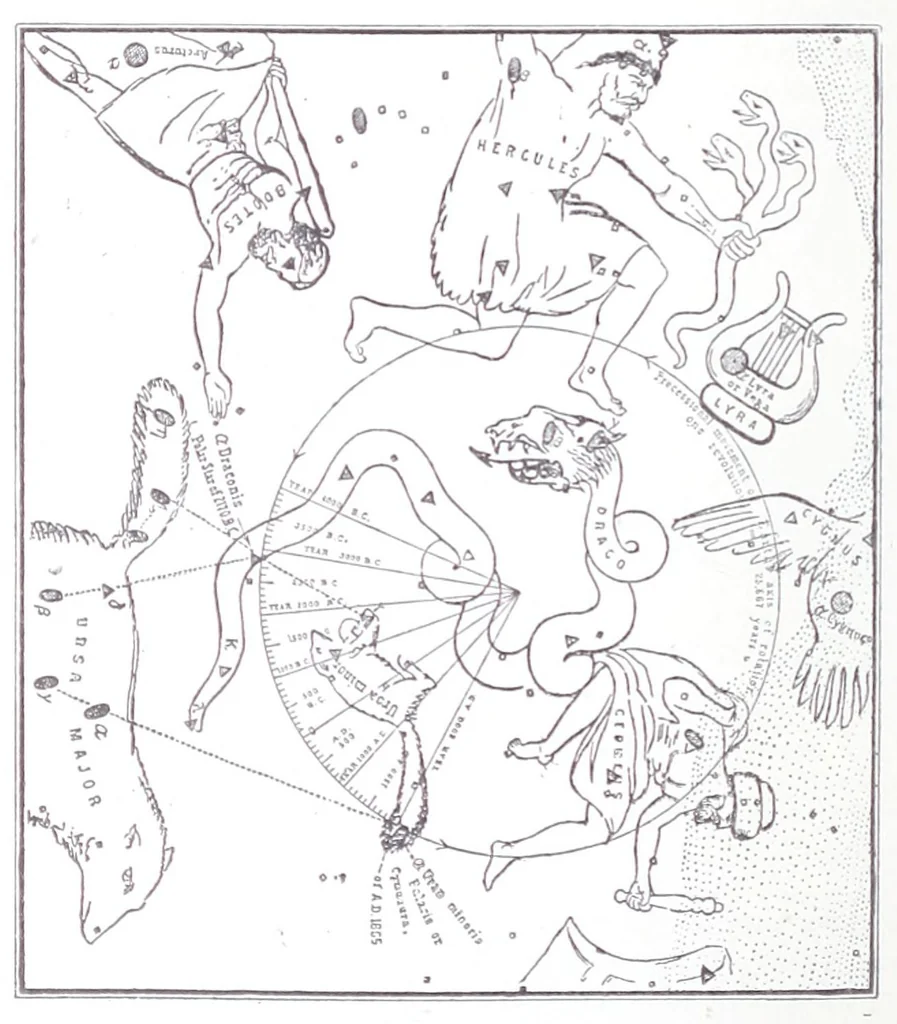
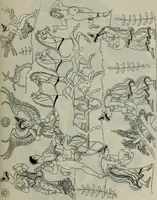
20 KEY-XOTE OF ANCIENT tion and several illustrations (pi. n, a-/, etc.). The map, re¬ produced here (fig. 5), proves that, with two exceptions, which can be attributed to a migration southward, the employment of the swastika has been confined to the northern hemisphere, i. e., pre¬ cisely to that… … STAR-MAP, REPRESENTING THE PRECESSION AL MOVEMENT OF THE CELESTIAL POLE FROM THE year 4000 . C. TO THE TEAR 2000 A. D. ( From Piazzi Smyth.) Fig. 6. mately, the date iu the world’s history when the swastika began to be employed as a symbol, next occurred to me. Piazzi Smyt ds star-map, discussed…
Civilization -- History · Mayas -- Antiquities · Calendar, Mexican · Mythology · Calendar · Swastikas
Internet Archive · Getty Research Institute · Public domain (published before 1931). Free to use for anything.