The fundamental principles of Old and New World civilizations : a comparative research based on a study of the ancient Mexican religious, sociological and calendrical systems (1901)
Nuttall, Zelia, 1858-1933 · Cambridge, Mass. : Peabody Museum of American Archaeology and Ethnology · leaf 399
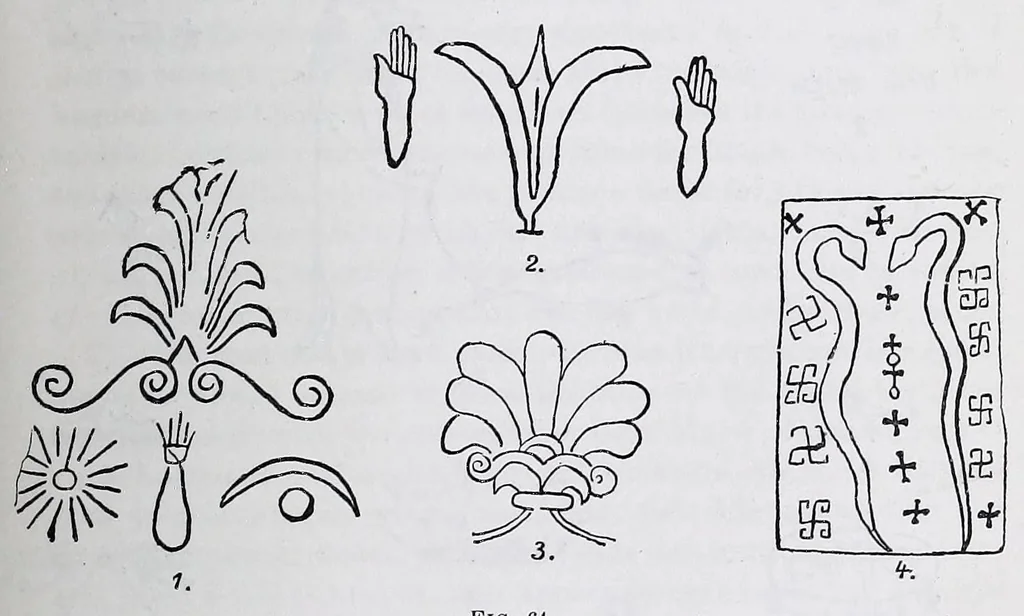
other figures, which are repeated, with variations of form, combination and position, in the different zodiacs. The principal and the phonetic values of their names are figured as follows : the thigh = uart, khepes or maskhet; the bull, ox or cow = ka, ah, aua ; the hawk = bak, designated as an,… … Fig. 6t. and seta ; the vase or jar = nu (cf. nut) ; the female hippopota¬ mus = tebt, shown by Dr. Gensler to have been associated with the name menat = nurse, she who nurses (see Brugsch i, p. 130). 1 An extremely interesting instance of the hand being actually figured between the sun and the…
Civilization -- History · Mayas -- Antiquities · Calendar, Mexican · Mythology · Calendar · Swastikas
Internet Archive · Getty Research Institute · Public domain (published before 1931). Free to use for anything.
![An illustration from La migration des symboles / [Eugène Félicien Albert Goblet d'Alviella]. (1891)](https://img.insideoutlibrary.com/img/200/wellcome-wellcome_b24864791-163-1.webp)