The fundamental principles of Old and New World civilizations : a comparative research based on a study of the ancient Mexican religious, sociological and calendrical systems (1901)
Nuttall, Zelia, 1858-1933 · Cambridge, Mass. : Peabody Museum of American Archaeology and Ethnology · leaf 90
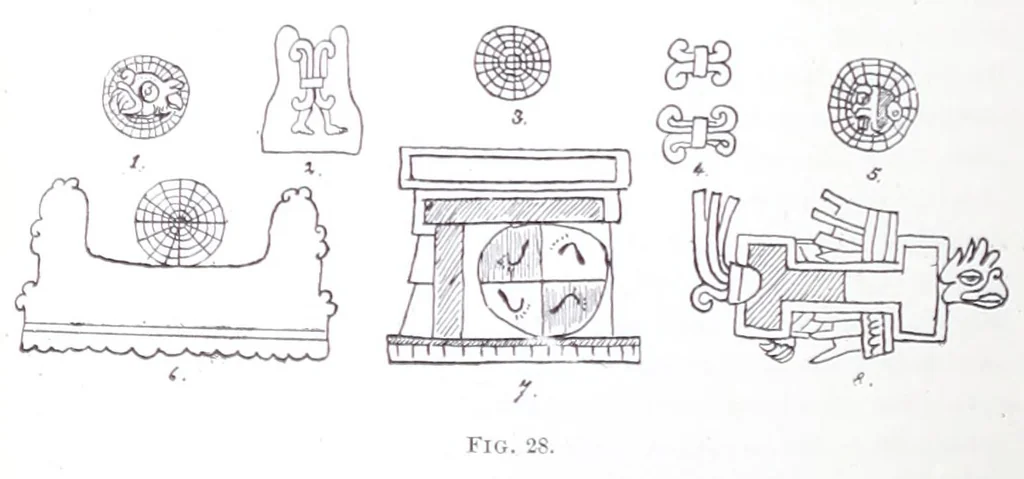
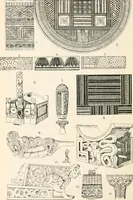
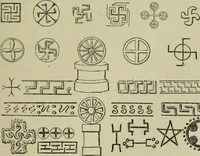
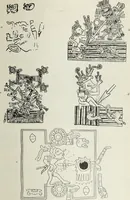
itin u Kill is Cumkal. The head of the land jw»rn lumnl.-f rliumnr «• \IU |>rirn Aarl.-l’ nl «tk prlrn CumkfiL— I pal prlrn chiimnr rsili li Ho. is the city, the capital IIo.” Flu. 27. The foregoing text shows that, notwithstanding the circular shape in which it is figured, the dominion was… … dex, of a double tau-shape to which the head, wings and claw, and tail of a quetzal are attached (fig. 28, no. 8). As I shall have occa¬ sion to demonstrate further on, the double tau signifies the Above and the Below and their union forming an integral whole. The following Nahuatl terms explain by…
Civilization -- History · Mayas -- Antiquities · Calendar, Mexican · Mythology · Calendar · Swastikas
Internet Archive · Getty Research Institute · Public domain (published before 1931). Free to use for anything.