The fundamental principles of Old and New World civilizations : a comparative research based on a study of the ancient Mexican religious, sociological and calendrical systems (1901)
Nuttall, Zelia, 1858-1933 · Cambridge, Mass. : Peabody Museum of American Archaeology and Ethnology · leaf 96
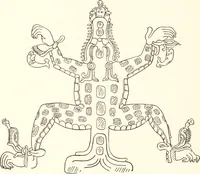
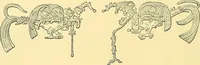
of the Quarters were symbolized bj' the four limbs. Each of these terminated in a symbolized group consisting of a hand, maitl, with a thumb (= touey mapilli or vei mapilli, literally, the great finger, or our great finger) and four fingers (mapilli) ; or of a great toe, touei xopil or topec-xopil… … the terms pilconetl = the son of a nobleman and pilhua = he who has sons (pil in this case meaning son and hua = possessor of). This latter fact could have been very aptly conveyed in the picture- writings by employing fingers to express the sound “pilli.” The number of sons a chieftain had could…
Civilization -- History · Mayas -- Antiquities · Calendar, Mexican · Mythology · Calendar · Swastikas
Internet Archive · Getty Research Institute · Public domain (published before 1931). Free to use for anything.