Grave-mounds and their contents; a manual of archaeology, as exemplified in the burials of the Celtic, the Romano-British, and the Anglo-Saxon periods (1870)
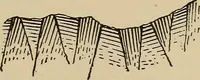
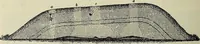
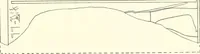
which is given on fig.67. The barrow has a depression running around its uppersurface, something like an elevated fosse, as will be seenin the section. The interments were made on the naturalsurface of the ground, where, in the centre, lay a skeleton, STONE CIRCLES, 73 on its right side, in a… … instruments. The outer circle was constructed of verylarge stones inclining inwards, and covered with smallstones and earth, and thus forming an extremely durablemound. Both of these examples, if denuded of their mounds,would form striking and very perfect stone circles, andwould be among the best…
Mounds · Megalithic monuments
Internet Archive · Wellesley College Library · Public Domain Mark 1.0. Free to use for anything.