The pattern maker's handybook : a practical manual on patterns for founders, embracing information on the tools, materials and appliances employed in their construction (1887)
Hasluck, Paul N. (Paul Nooncree), 1854-1931 · London : C. Lockwood · leaf 93
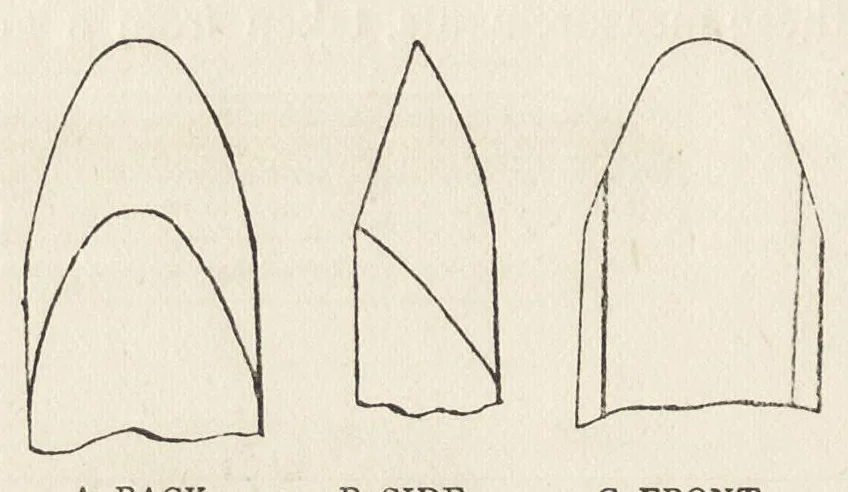
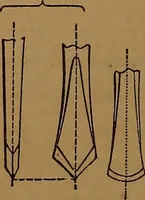
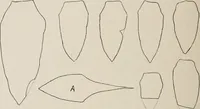
ing chamfer made by grinding the tool. The angle formed by this chamfer should be from twenty-five to thirty degrees. It is this chamfer that should form a tangent to the work when the gouge is in use. A shows the back, or convex side, of the gouge, and the chamfer will be seen to be of equal slope… … A BACK. B SIDE. C FRONT. Fig, 51. Grinding a Gouge. part rubbed along it, at the same time turning the tool slightly, as when grinding. Then with a slip of oil-stone having a rounded edge, the wire-edge, which will be found all round the cutting edge in the hollow side, is removed. In doing this…
Patternmakers · Patternmaking
Internet Archive · Getty Research Institute · Public domain (published before 1931). Free to use for anything.