The grammar of photo-engraving : containing instruction in drawing, chemistry and optics, as applied to photo-engraving, and a practical treatise on the art of half-tone, zinc etching, swelled gelatine, lithotype and chalk plate engraving, as practiced in the United States (1895)
Farquhar, H. D. (Harry D.), Eder, Josef Maria, 1855-1944 · London : Dawbard & Ward · leaf 57
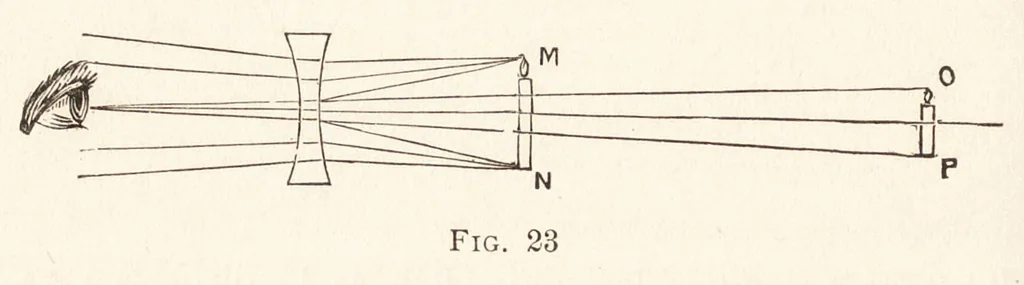
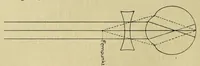
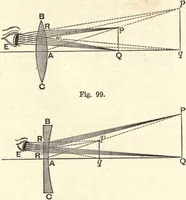
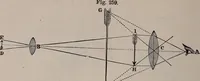
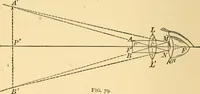
52 THE GRAMMAR OF PHOTO-ENGRAVING. convex lenses, and therefore producing opposite results. The images produced by a concave lens are always smaller and erect. Fig. 23. It will be noticed that the rays from the candle strike the lens at different angles, some being refracted … so much as to miss the eye. Those only that pass through the center of the lens, lead to the eye, it is the reason why the image is seen under a small angle. Spherical Aberation. Rays which pass through a lens near the edge are brought to a focus sooner than those near the center. When focusing on…
Photoengraving
Internet Archive · Getty Research Institute · Public domain (published before 1931). Free to use for anything.