Schwarkzkopf, Ernst · New York : J. Wiley & Sons ; London : Chapman and Hall · leaf 36
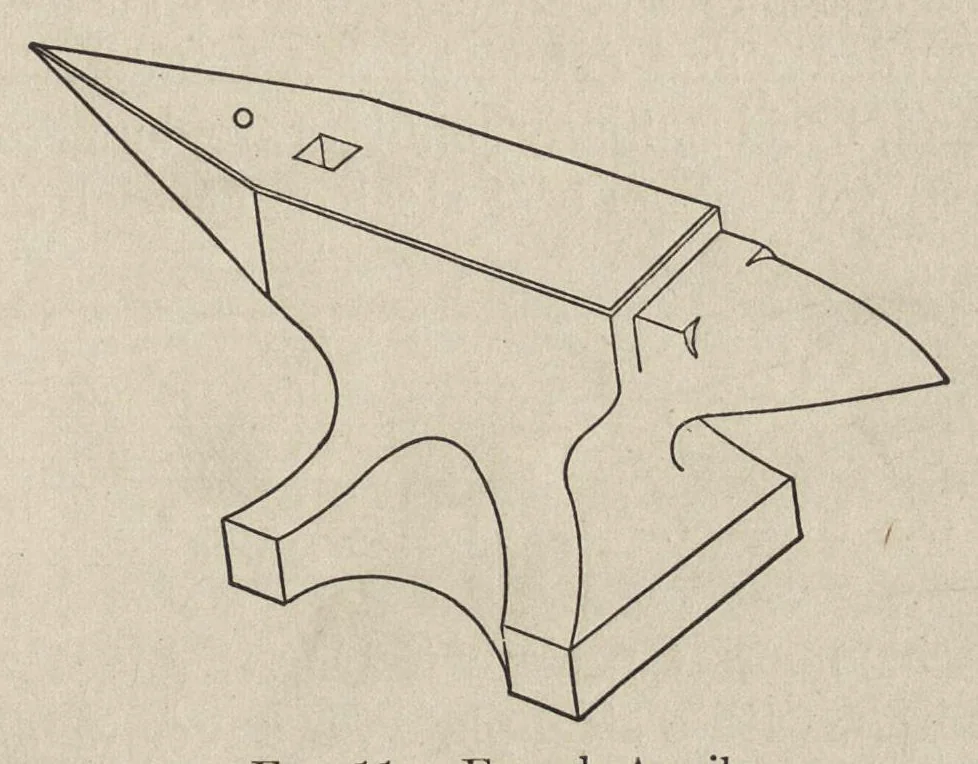
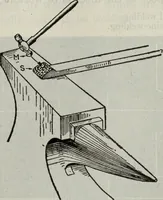
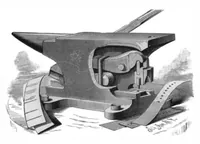
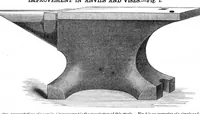
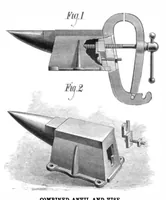
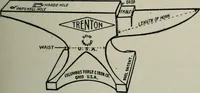
al horn on one end and is known as the English anvil. The French anvil (Fig. 11) has a conical horn on one end and a wedge-shaped or pyramidal horn on the other. Nowadays, anvils are usually made wholly of cast steel or of cast iron, with a steel face which, is welded or incorporated upon it by a… … In schools and in large shops a cast-iron base is used for the smaller work. A base for the anvil may be obtained by sawing in two a large cask or oil barrel, filling one of the halves with clay or sand, into which is fitted a heavy timber for the anvil to rest upon. Anvils are used not only by…
Forging
Internet Archive · Getty Research Institute · Public domain (published before 1931). Free to use for anything.