Ilios; the city and country of the Trojans. The results of researches and discoveries on the site of Troy and throughout the Troad in the years 1871-72-73-78-79, including an autobiography of the author (1880)
Schliemann, Heinrich, 1822-1890, Virchow, Rudolf, 1821-1902, Müller, F. Max (Friedrich Max), 1823-1900, Sayce, A. H. (Archibald Henry), 1845-1933, Mahaffy, J. P. (John Pentland), 1839-1919, Brugsch, Heinrich, 1827-1894, Ascherson, Paul, 1834-1913, Postolakas, Achilles, Burnouf, Emile, 1821-1907, Calvert, Frank, Dufield, Alexander James, 1821-90 · New York: Harper & Bros · leaf 370
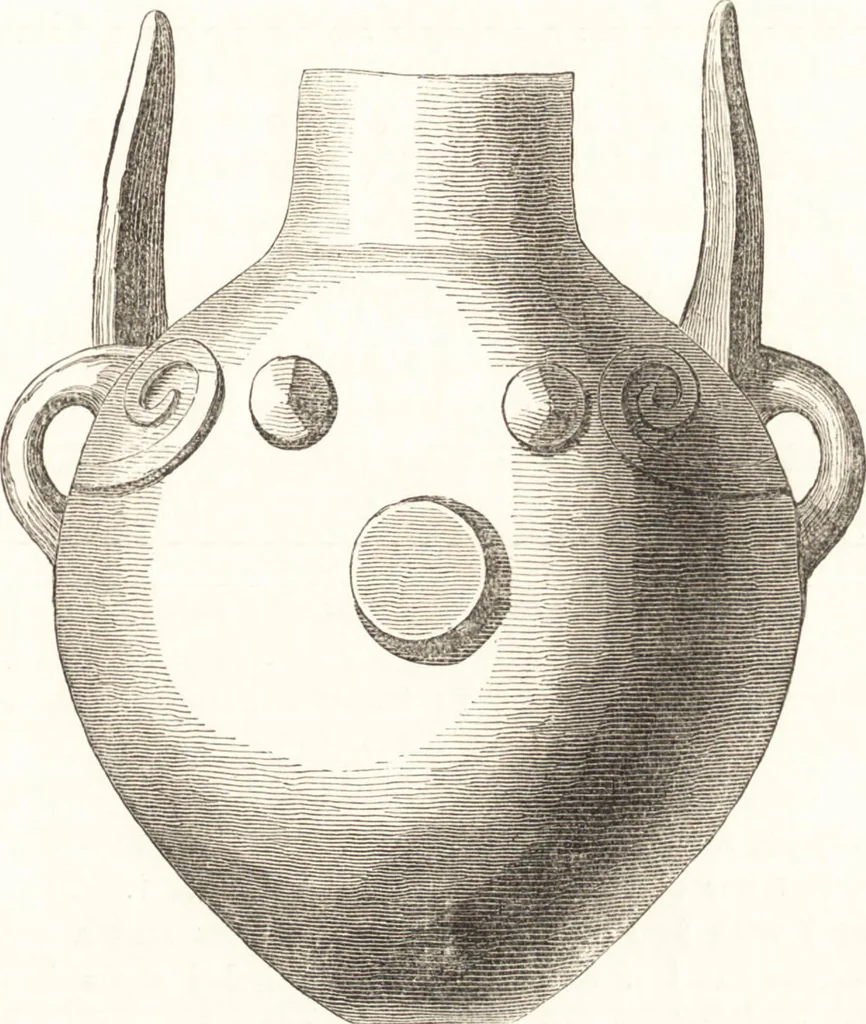
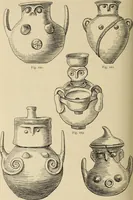
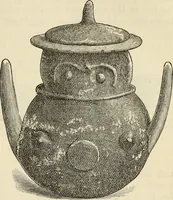
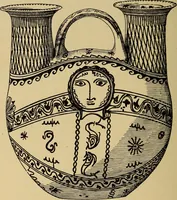
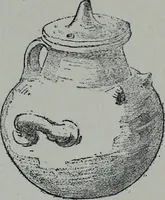
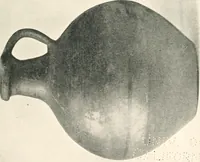
plates at theend of the volume. 5 M. Burnouf writes to me: This ball (No.1997) gives probably the explanation of a greatpart of the Trojan symbolism, because it is most evident that the female in the centre repreentshere the dawn. The signs on the whorl. arenearly all astronomical. 6 See my… … No. 210. Large Vase,-with the characteristics of a woman. (About 1: 5 actual size. Depth, 26 ft.) wing-like projections, from each of which issues on either side a spiralornament in relief, resembling, as Professor Sayce observes, the lituusor crooked staff carried by certain figures in the Hittite…
Archaeology
Internet Archive · Getty Research Institute · Public Domain Mark 1.0. Free to use for anything.