Ilios; the city and country of the Trojans. The results of researches and discoveries on the site of Troy and throughout the Troad in the years 1871-72-73-78-79, including an autobiography of the author (1880)
Schliemann, Heinrich, 1822-1890, Virchow, Rudolf, 1821-1902, Müller, F. Max (Friedrich Max), 1823-1900, Sayce, A. H. (Archibald Henry), 1845-1933, Mahaffy, J. P. (John Pentland), 1839-1919, Brugsch, Heinrich, 1827-1894, Ascherson, Paul, 1834-1913, Postolakas, Achilles, Burnouf, Emile, 1821-1907, Calvert, Frank, Dufield, Alexander James, 1821-90 · New York: Harper & Bros · leaf 609
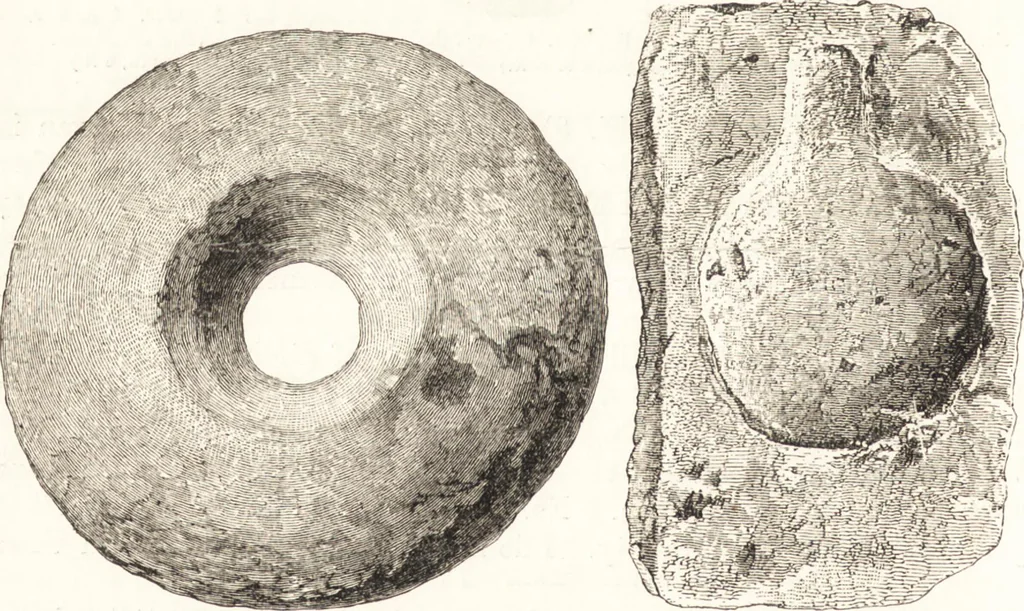
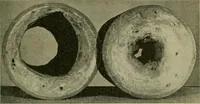
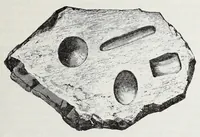
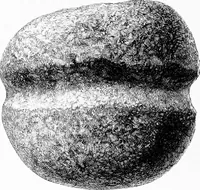
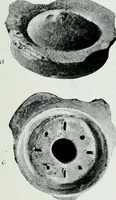
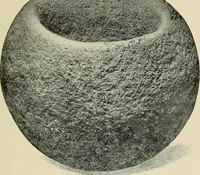
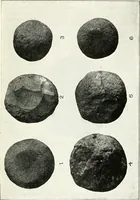
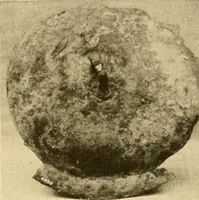
. 1345 is an instrument ofsilicious stone, which may have served as a weight for fishing-nets.Similar stone instruments are found in Denmark.5 No. 1346 is of whitemarble, and from its shape we are led to think that it may be a symbol ofPriapus. I have discussed this subject in the preceding pages.… … No. 1317. Stone Disc or Quoit. (Half actual size.Depth, 9 ft.) No. 1348. Mould of Limestone, in the shapeof a bottle. (Half actual size. Depth, 6ft.) cities of Hissarlik. The game of quoit-throwing was in general use in theHomeric age. The player who threw it farthest gained the prize;6 hence 4 F.…
Archaeology
Internet Archive · Getty Research Institute · Public Domain Mark 1.0. Free to use for anything.