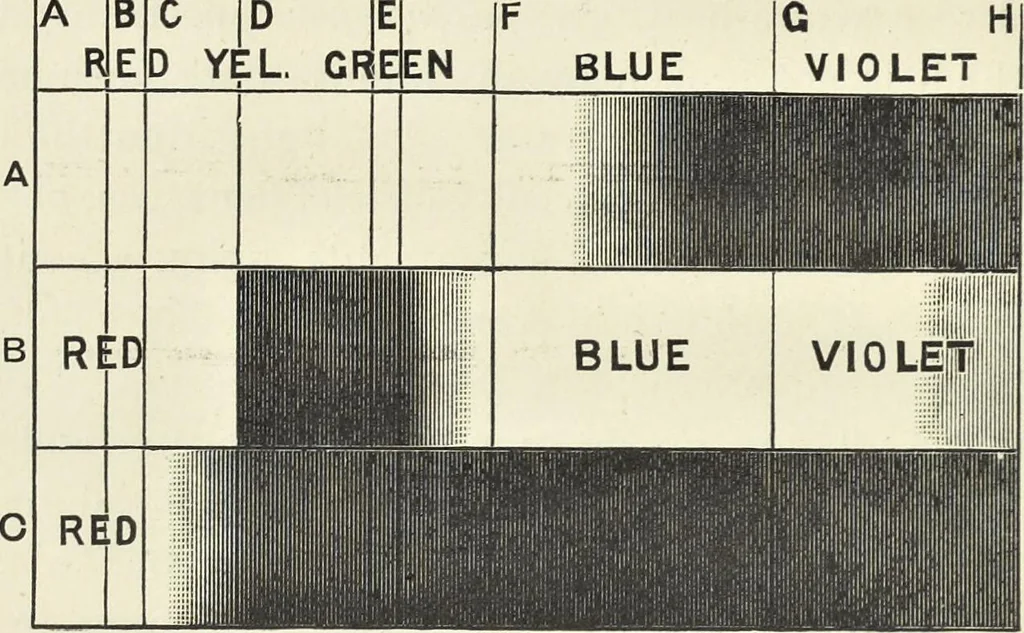
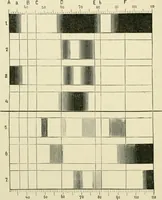
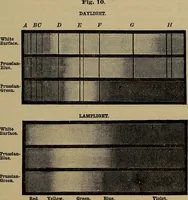
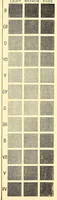
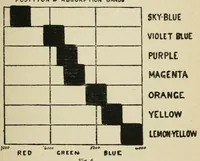
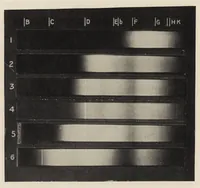
COLOUR MIXING. M ■ ■ e.*so I simply because it transmits the yellow rays of the spectrum,but because it absorbs that part of the spectrum complemen-tary to yellow, i.e., blue and violet. The red, green andblue-green rays, which are not absorbed, are combined onthe retina of the eye, and produce… … RED YEL. GREEN BLUE VIOLET Fig. 11.A = Representing the absorption spectrum of picric acid.B = Magenta (dilute).C = Magenta (strong). Another simple example of an absorption spectrum willbe found by viewing with the spectroscope a dilute solutionof the beautiful pink dye, magenta. In this case the…
Color in the textile industries · Dyes and dyeing
Internet Archive · Getty Research Institute · Public Domain Mark 1.0. Free to use for anything.