A guide to the Department of Greek and Roman Antiquities in the British Museum (1899)
British Museum. Dept. of Greek and Roman Antiquities, Smith, A. H. (Arthur Hamilton), 1860-1941 · London : Printed by order of the Trustees · leaf 20
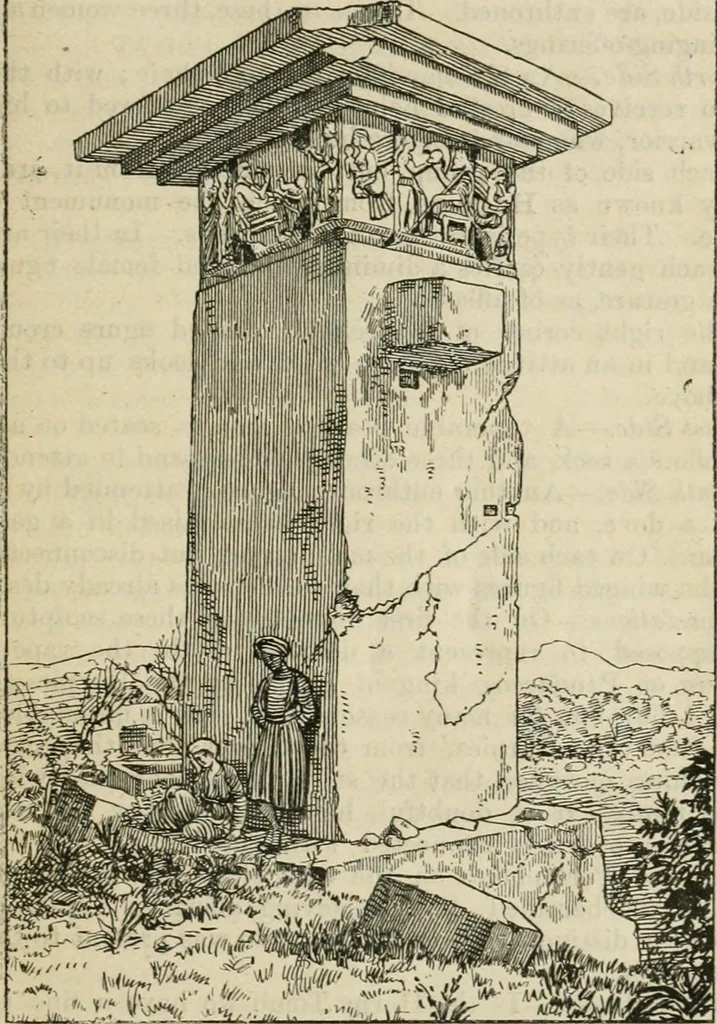
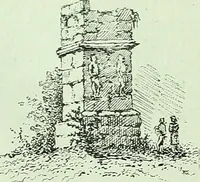
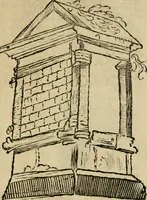
se. 89, 90. Gable end of a tomb. On each side of a doorway is aseated Sphinx, and above the lintel are two lions. Like many of The Harpy Tomh. 7 the Lycian sculptures, these reliefs were brilliantly coloured when-they were discovered, with red, blue, yellow, etc., but only fainttraces can now be… … ■^ ijL. Fig. 2.- View of the Harpy Tomb at Xanthos. Xo. 94. (After a ilrawing ly George ScJiarf.) •old men. This relief, like those above mentioned, retained itscolouring when discovered. 94. The Harpy Tomb.—The monument known as the HarpyTomb is one of the most important and elaborate works of…
Art, Greek · Art, Roman
Internet Archive · California Digital Library · Public Domain Mark 1.0. Free to use for anything.