A guide to the Mediaeval Room and to the specimens of mediaeval and later times in the gold ornament room : with fourteen plates and a hundred and ninety-four illustrations (1907)
British Museum. Dept. of British and Mediaeval Antiquities and Ethnography, Dalton, O. M. (Ormonde Maddock), 1866-1945, Read, Charles Hercules, Sir, 1857-1929 · [London] : Printed by order of the Trustees · leaf 85
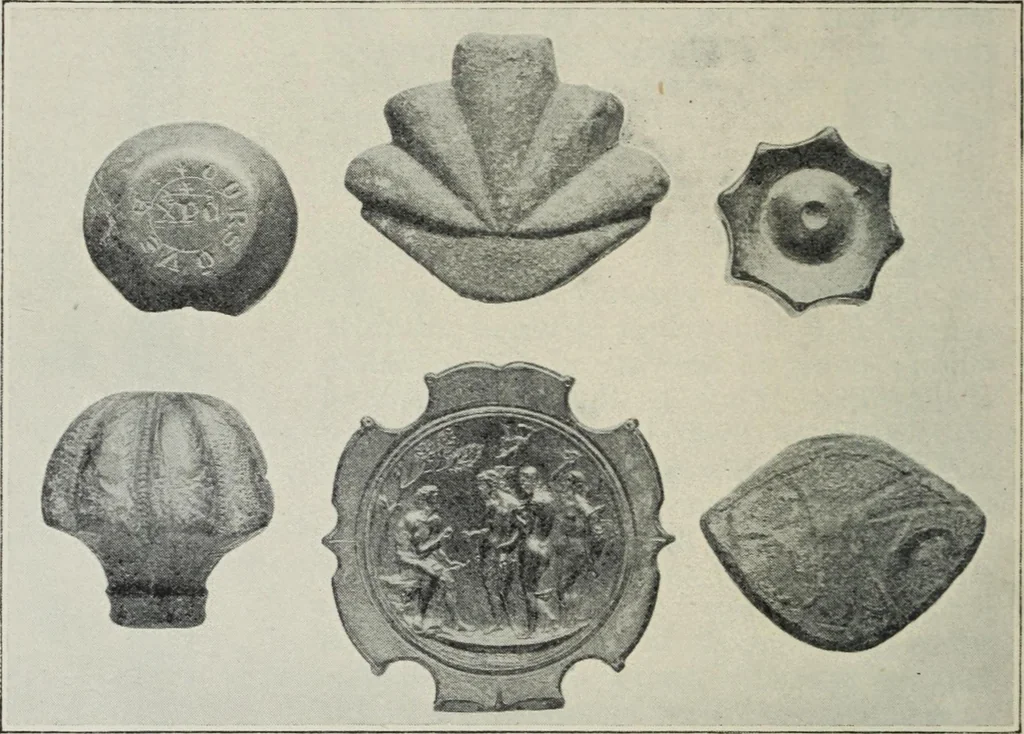
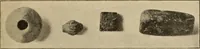
ur mentioned above. The Greeks wore bronzecorslets, in two parts (back- and breast-plates) moulded to the shapeof the body, greaves covering the lower part of the legs, and metalhelmets. The Etruscans and the Romans followed them in this, butthe latter nation had also other varieties of… … Fig. 56.—Pommels of swords, twelfth to sixteenth centuries. Persians and their neighbours in Central Asia, and exemplifiedin remains found in Graeco-Scythian tombs in Southern Russia asearly as the fourth century b. c. Such armour was evidently of widedistribution in Inner Asia, and was made of…
British Museum. Dept. of British and Mediaeval Antiquities and Ethnography · Art objects · Art, Medieval
Internet Archive · Pontifical Institute of Mediaeval Studies Library · Public Domain Mark 1.0. Free to use for anything.