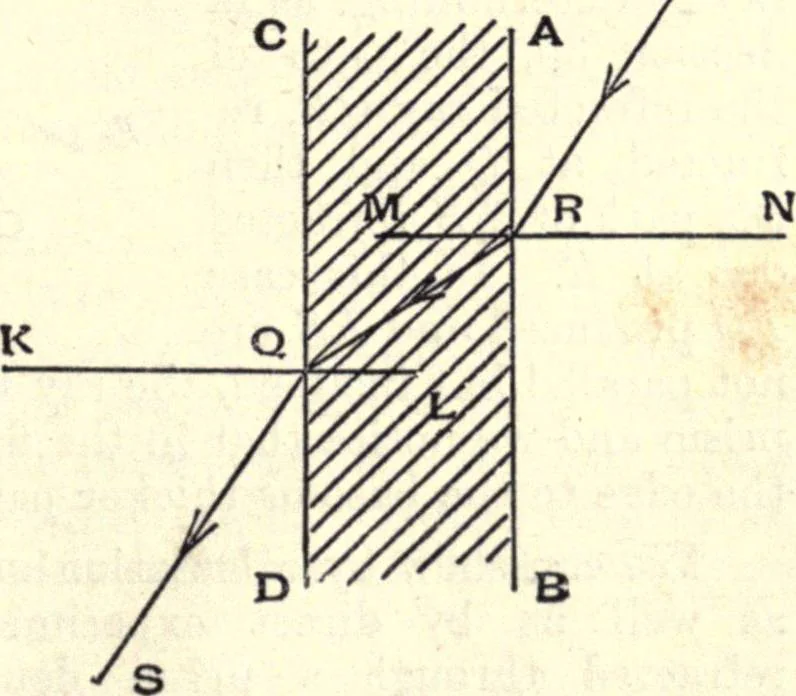
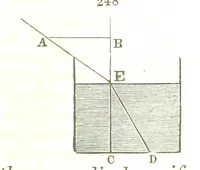
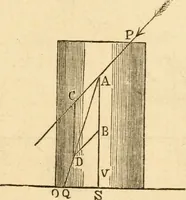
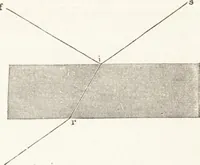
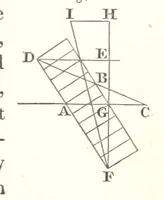
action it is deviated or bent from its course; bythe second refraction it is again deviated, but this seconddeviation is equal in amount to the first and / is in the opposite direc-tion to it. The conse-quence is that the rayemerges from the plate ina direction parallel to thatof the incident ray.… … 68 LIGHT. [CH. IV meets the second surface at Q, and being again refracted there,it emerges along QS. Then QS will be parallel to PR. For,draw the normals MRN, KQL, the angle of incidence RQLat Q is equal to the angle of refraction QRM at R. Hencethe angle of emergence SQK must be equal to the…
Heat · Light
Internet Archive · California Digital Library · Public Domain Mark 1.0. Free to use for anything.