A history of architecture in Italy from the time of Constantine to the dawn of the renaissance (1901)
Cummings, Charles Amos, 1833-1905 · Boston, New York, Houghton Mifflin and company · leaf 203
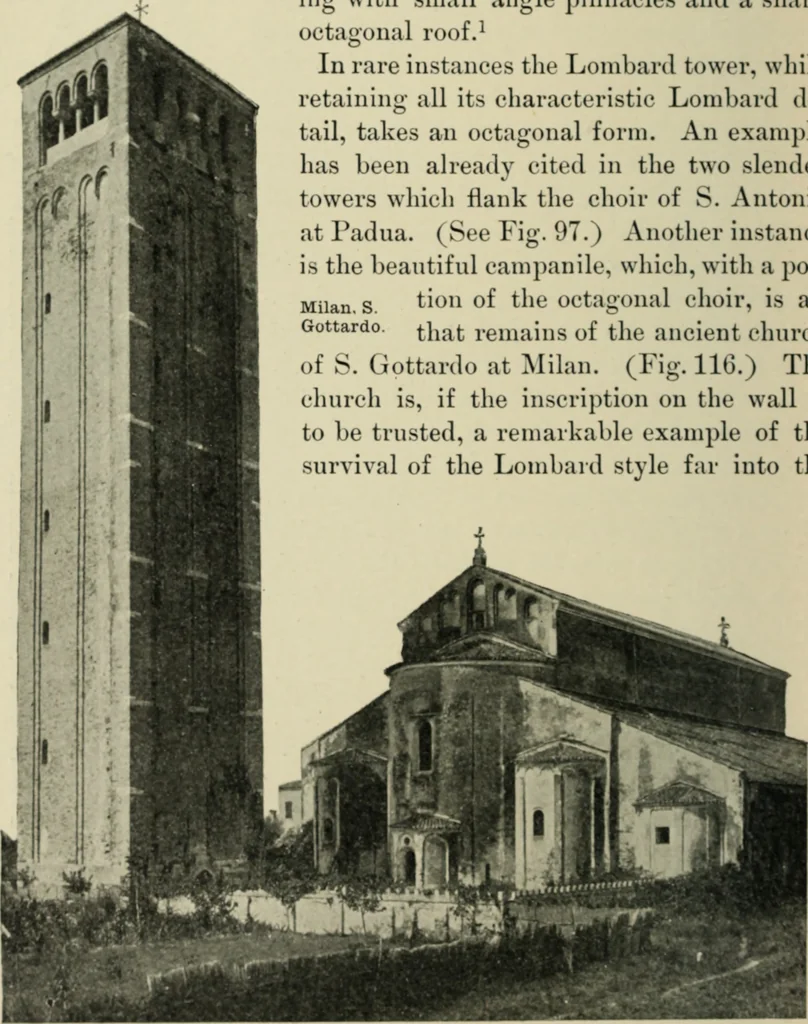
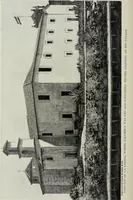
l its characteristic Lombard de-tail, takes an octagonal form. An examplehas been already cited in the two slendertowers which flank the choir of S. Antonioat Padua. (See Fig. 97.) Another instanceis the beautiful campanile, which, with a por-Miian. s ^iou of the octagoual choir, is allGottardo.… … ¥i^. 11*. Cjiiiipjinile and East End of Cathedral, Torcello. (iothic ])eri()d, being a century later than S. Andrea and S. Antonio,yet both choir and tower are thoroughly Lombard in character. The ^ Oston. 1)1. i.\. IlIK LOMIiAKI) KOMANKSQIIK t i inflcrij>tion reads as follows — On tliu hiU. of…
Architecture
Internet Archive · Pontifical Institute of Mediaeval Studies Library · Public Domain Mark 1.0. Free to use for anything.