A history of architecture in Italy from the time of Constantine to the dawn of the renaissance (1901)
Cummings, Charles Amos, 1833-1905 · Boston, New York, Houghton Mifflin and company · leaf 220
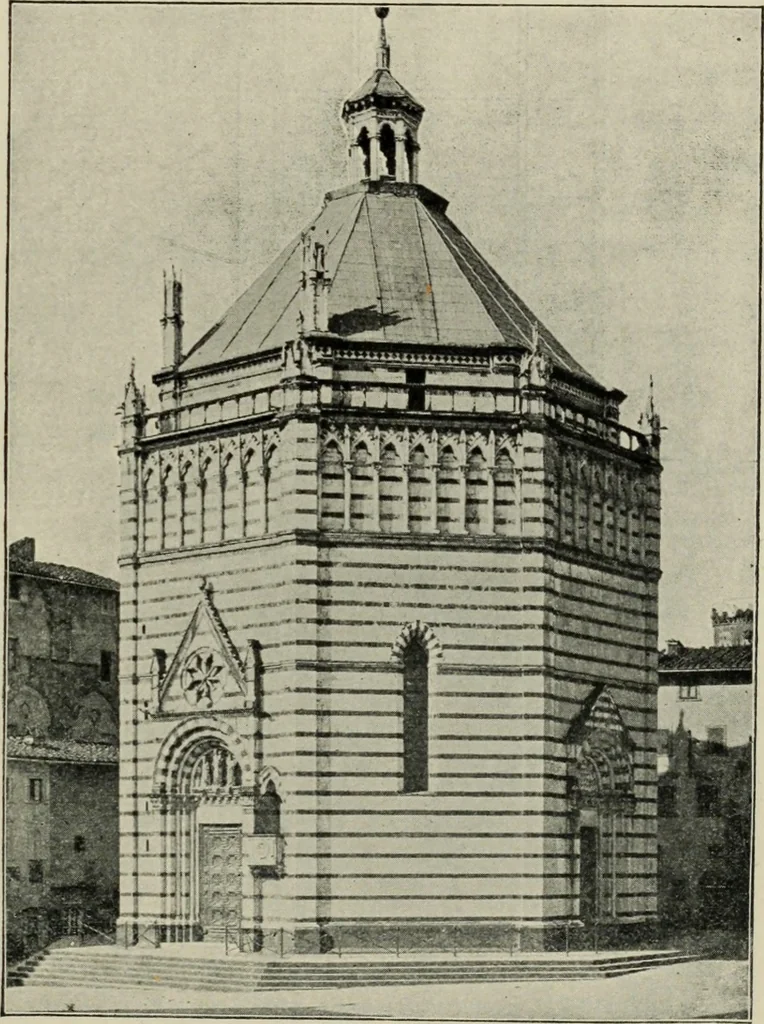
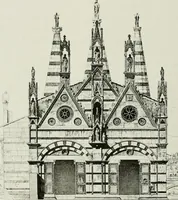
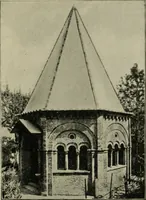
f marble, with thin courses of a darkgray stone at inter-vals. The little build-ing has a simplicity,repose, and elegancewhich make it one ofthe most interestingexamples of the Ital-ian Gothic. (Fig.371.) Speaking gener-ally, it may be saidthat in Tuscany, thesame feeling for broaddecorative forms… … Fig. 371. Pistoia. Baptistery. the contemporary churches of Pavia or Padua or Milan — survivedthrough the Gothic period, and appears in most of the characteristicwork of the time. Yet this feeling was not allowed to affect theinteriors, which, even in the greatest examples, as Santa Croce and 204…
Architecture
Internet Archive · Pontifical Institute of Mediaeval Studies Library · Public Domain Mark 1.0. Free to use for anything.