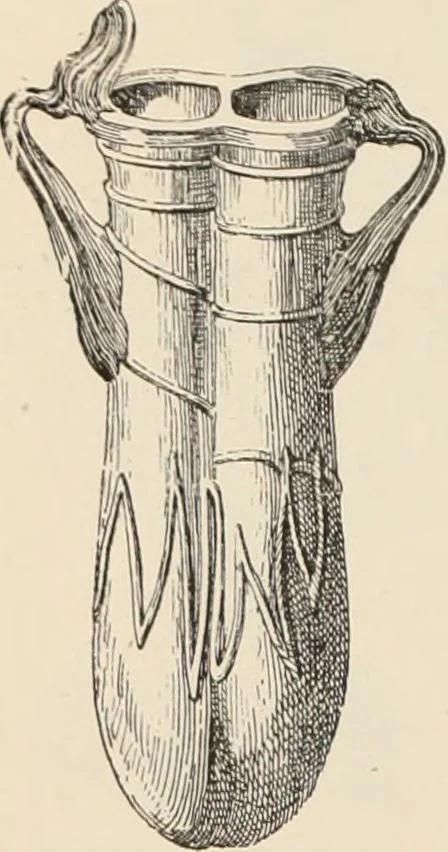
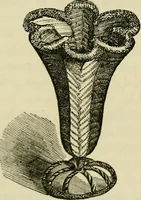
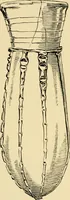
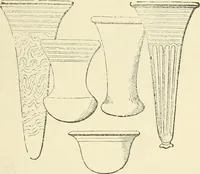
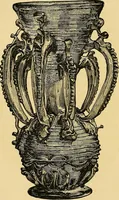
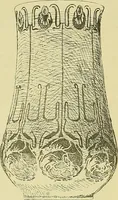
ning form, which may be a citron or arough-skinned coloquinta at will. The seams under the foot ofthe vessel show that the fused body was blown on three hollowcores or pipes (Fig. 2 52).3 The exact locality of this flagon is notknown ; save that Perétié picked it up somewhere in Syria. Its 1 Hist,… … Fig. 251.—Glass Flagon. ront.;nilpJSize of the original. Re- COntlcovery, p. 489. Industrial Arts. 359 characteristic ornament, however, is essentially Jewish, enablingus, if not to fix a certain date, at least to place it long afterthe exile, made too by an Israelite for an Israelite. Needless…
Hittites · Art · Jews
Internet Archive · University of Toronto, Robarts Library · Public Domain Mark 1.0. Free to use for anything.