History of physical astronomy, from the earliest ages to the middle of the 19th century. Comprehending a detailed account of the establishment of the theory of gravitation by Newton, and its development by his successors; with an exposition of the progress of research on all the other subjects of celestial physics (1852)
Grant, Robert, 1814-1892 · London, R. Baldwin · leaf 612
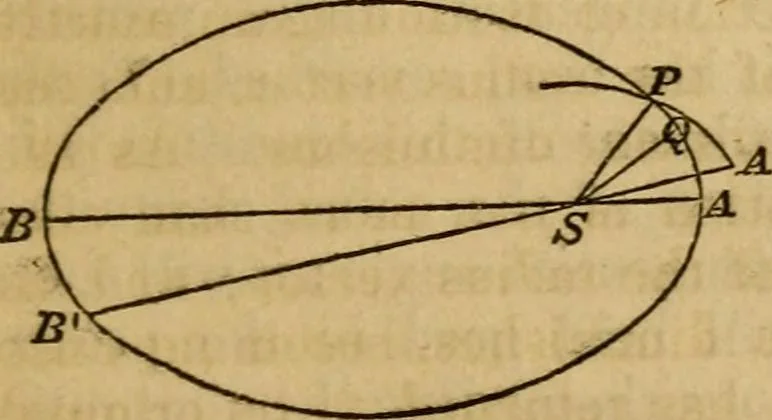
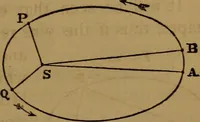
less advancedin the orbit. Now when the planet is inthe vicinity of either apse, its distancefrom the focus varies very slowly, and thesame is true respecting the velocity andthe force. Hence the circumstances whichdetermine the path of the planet at p and q may be regarded as identical.The new… … 588 APPENDIX. words, the effect of the disturbing force is to make the line of ajmdes toprogress. (14.) It is manifest that the increment of the tangential angle in pass-ing from Q to p is equal to the excess of the angular displacement of theradius vector over the absolute deflection of motion…
Astronomy
Internet Archive · Wellesley College Library · Public Domain Mark 1.0. Free to use for anything.