History of physical astronomy, from the earliest ages to the middle of the 19th century. Comprehending a detailed account of the establishment of the theory of gravitation by Newton, and its development by his successors; with an exposition of the progress of research on all the other subjects of celestial physics (1852)
Grant, Robert, 1814-1892 · London, R. Baldwin · leaf 613
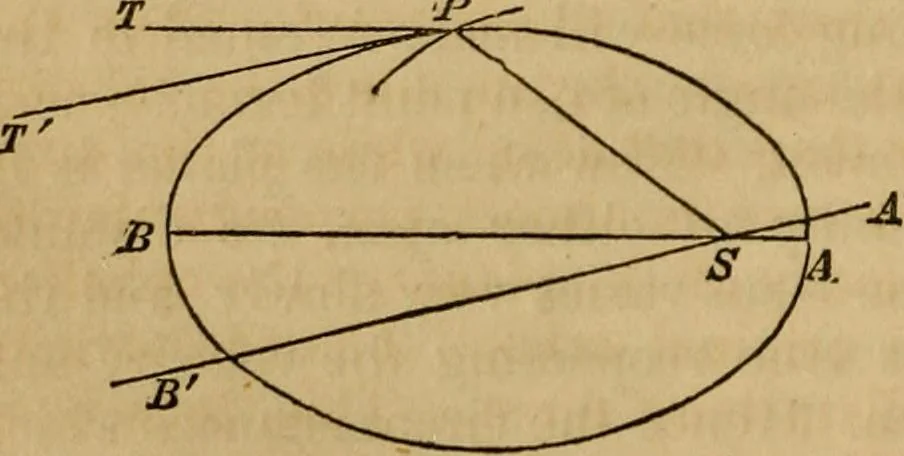
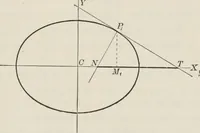
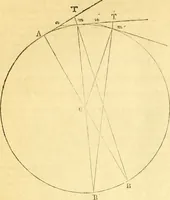
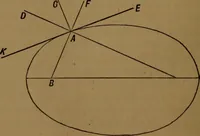
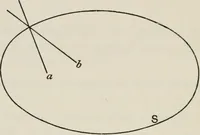
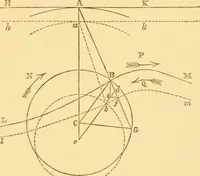
tangential angle vanishes. Now, it has been remarked (7) thatthe fulfilment of this condition is in-dependent of the actual magnitudeof the tangential angle; it will there-fore still hold good in the presentcase, notwithstanding the diminutionof the tangential angle occasioned bythe action of the… … APPENDIX. 589 of mean distance. Hence it follows that in tbe new, as well as in theundisturbed ellipse, the planet is at the mean distance. Let p denote theplace of the planet, p t the tangent of the undisturbed orbit, and p t thetangent of the new^ orbit. Now, since in an ellipse the tangent at…
Astronomy
Internet Archive · Wellesley College Library · Public Domain Mark 1.0. Free to use for anything.