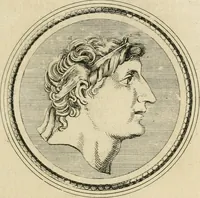
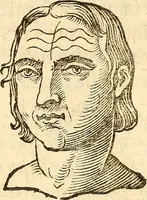
Human science, or, Phrenology : its principles, proofs, faculties, organs, temperaments, combinations, conditions, teachings, philosophies, etc., etc. : as applied to health, its values, laws, functions, organs, means, preservation, restoration, etc. : mental philosophy, human and self improvement, civilization, home, country, commerce, rights, duties, ethics, etc. : God, His existence, attributes, laws, worship, natural theology, etc. : immortality, its evidences, conditions, relations to time, rewards, punishments, sin, faith, prayer, etc. : intellect, memory, juvenile and self education, literature, mental discipline, the senses, sciences, arts, avocations, a perfect life, etc., etc., etc. (1873)
Fowler, O. S. (Orson Squire), 1809-1887, McManus-Young Collection (Library of Congress) DLC · Philadelphia, Pa. ; Chicago, Ill. ; Cincinnati, Ohio ; St. Louis, Mo. : National Publishing Co. ; San Francisco, Cal. : A.L. Bancroft & Co. · leaf 1014
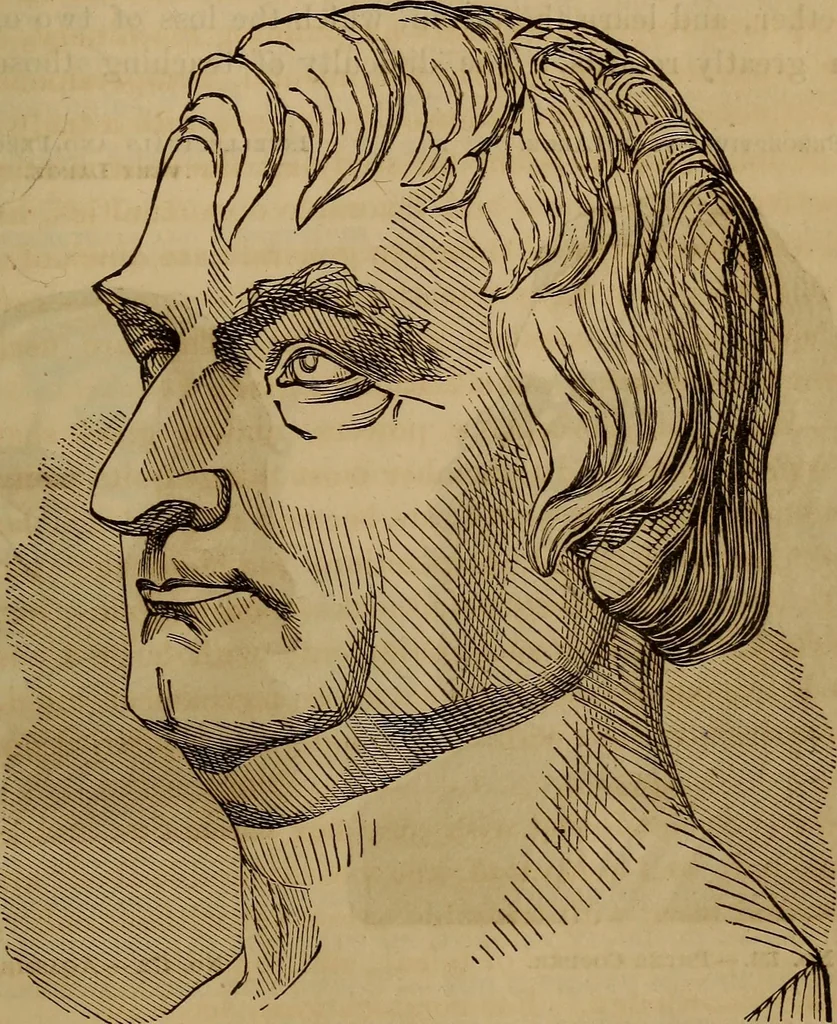
ith moderate expression, are rather wanting inpractical talent. ANALYSIS AND CULTIVATION OF THE PERCEPTIVES. 989 Small — Are very deficient in recollecting and judging; lackpractical sense, and should cultivate the knowing and remember-ing Faculties; see few things, and know little about the… … No. 170. —John Jacob Astor. study the natural sciences, especially Phrenology; and examinethe natural qualities of all material objects. This rule for observing their size obviates the objection some-times urged that the eyebrows and their arches prevent the cor-rect diagnosis of these smaller…
Phrenology
Internet Archive · Library of Congress · Public Domain Mark 1.0. Free to use for anything.
![An illustration from Recueil de trois cent têtes et sujets de composition [graphic] (1775)](https://img.insideoutlibrary.com/img/200/ia-gri_recueildetro00cayl-100-137.webp)