An illustrated dictionary of words used in art and archaeology. Explaining terms frequently used in works on architecture, arms, bronzes, Christian art, colour, costume, decoration, devices, emblems, heraldry, lace, personal ornaments, pottery, painting, sculpture, &c., with their derivations (1883)
Mollett, John W. (John William) · London, S. Low, Marston, Searle and Rivington · leaf 61
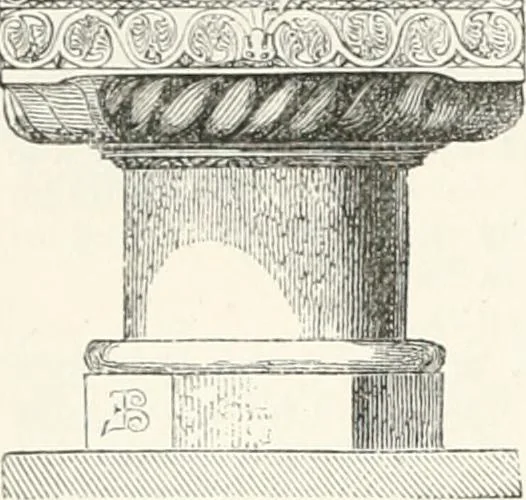
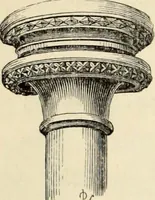
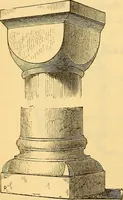
edingly clear. Everything leads us to sup-pose that it was a linen material of the finestquality. This opinion would seem to be con-firmed by Herodotus and ^Eschylus. The wordcomes from the Hebrew ////;. Byzantine Pe-u«^ii_iiix:.^ ^-^^—•^- -^:r^ riod. Time, about6th to 12th cen-tury A. D.… … Fig. 119. Byzantine Funt.
Art -- Dictionaries · Archaeology -- Dictionaries
Internet Archive · Getty Research Institute · Public Domain Mark 1.0. Free to use for anything.