Introductory course of natural philosophy for the use of schools and academies. Ed. from Ganot's popular physics. By William G. Peck (1869)
Ganot, Adolphe, 1804-1887, Peck, William Guy, 1820-1892 · New York A.S. Barnes · leaf 233
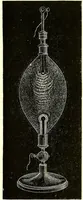
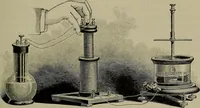
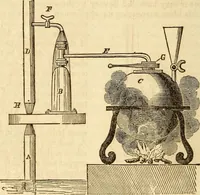
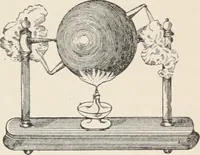
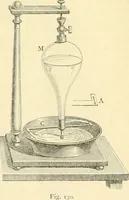
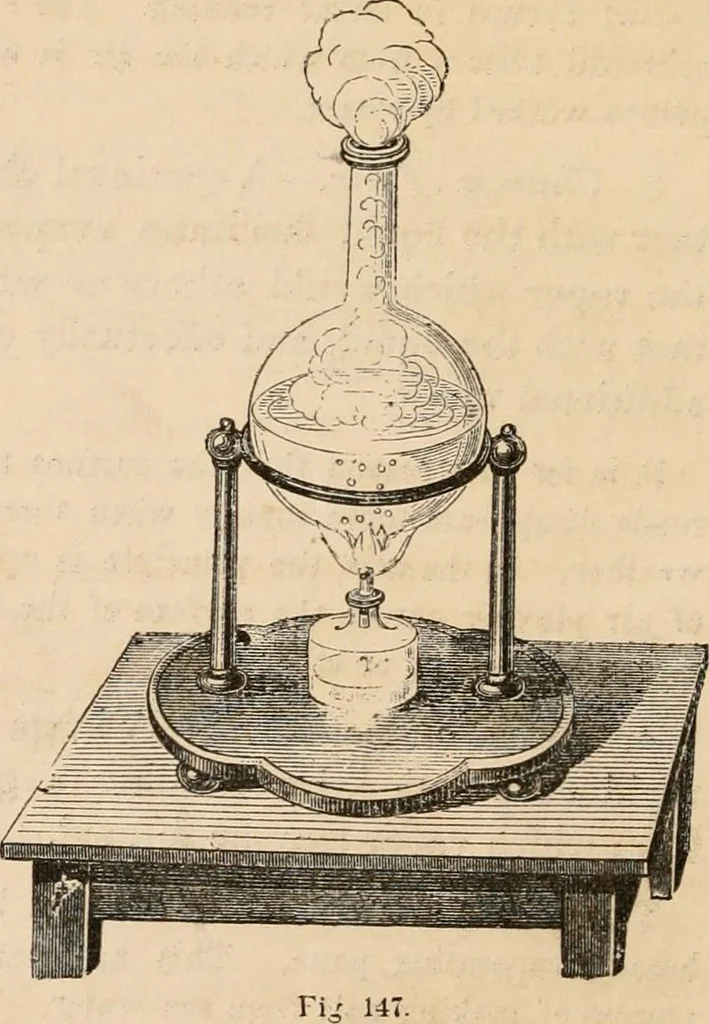
nd es- cape with a commo-tion that we call boil-ing, as shown in Fig.147. The following arethe laws that gov-ern the phenomenaof ebullition: 1. Under the same pressure, each liquid enters intoebullition at a fixed temperature. The temperature at which a liquid boils is called its boil-ing point.… … So-plain the phenomena of bailing. What, is the first law of ebullition? Illus-trate. VAPORIZATION. 231 2. The pressure remaining the same, a liquid can not beheated higher than the boiling point. For example, if -water be heated to 212°, it will begin toboil, and no matter how much heat may be…
Physics
Internet Archive · Gerstein Library, University of Toronto · Public Domain Mark 1.0. Free to use for anything.
![An illustration from One thousand processes in manufactures and experiments in chemistry / [Colin Mackenzie]. (1825)](https://img.insideoutlibrary.com/img/200/wellcome-wellcome_b29307867-349-1.webp)