Leadless decorative tiles, faience, and mosaic, comprising notes and excerpts on the history, materials, manufacture & use of ornamental flooring tiles, ceramic mosaic, and decorative tiles and faience, with complete series of recipes for tile-bodies, and for leadless glazes and art-tile enamels (1904)
Furnival, W. J. (William James) · Stone, Staffordshire, W.J. Furnival · leaf 130
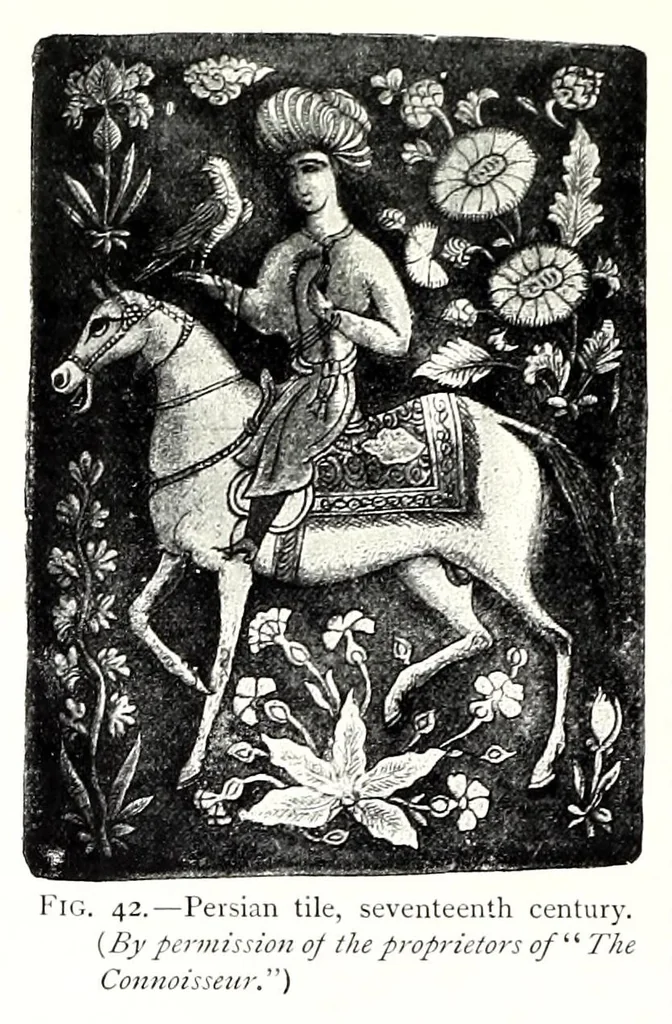
nnoisseurs never tire of praising Persian tiles. Mr. Sparkes, of the Royal College of Art, said : — “ Persian tiles looked as if a piece of glass had actually been melted down on the surface, so enormously thick was the glaze. That thickness was one of the greatest factors to the pleasure one had… … century the Persians were perhaps the best decorative artists the world had ever seen.” ( Sentinel , 23rd February 1891.) One of the most distinctive characteristics of Persian ceramics was their lustre ; and unless in some way learned from China or India, this seems to have been their own de novo…
Pottery · Tiles · Mosaics · Enamel and enameling
Internet Archive · Getty Research Institute · Public domain (published before 1931). Free to use for anything.