Mechanical movements, powers and devices; a treatise describing mechanical movements and devices used in constructive and operative machinery and the mechanical arts, being practically a mechanical dictionary, commencing with a rudimentary description of the early known mechanical powers and detailing the various motions, appliances and inventions used in the mechanical arts to the present time, including a chapter on straight line movements, by Gardner D. Hiscox (1914)
Hiscox, Gardner Dexter, 1822?-1908 · New York, The Norman W. Henley publishing co. · leaf 196
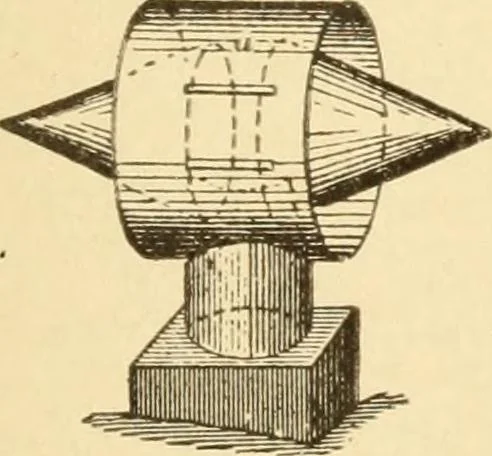
ed by a valve nearthe top of the tank. The valve handles hangingfrom the stems regulate each burner. 691. AIR AND GASOLINE BRAZINGAPPARATUS.—A small attached pumpforces air into a tank holding a small quan- titv of erasoline. A gauge shows the air pressure. From the top of the tank a pipeextends to… … 692. DOUBLE CONE VENTILATOR.— The up-take enters between the cones. Thesmoke has its exit around the edge of the lee-ward cone.
Mechanical movements
Internet Archive · Library of Congress · Public Domain Mark 1.0. Free to use for anything.