Mechanical movements, powers and devices; a treatise describing mechanical movements and devices used in constructive and operative machinery and the mechanical arts, being practically a mechanical dictionary, commencing with a rudimentary description of the early known mechanical powers and detailing the various motions, appliances and inventions used in the mechanical arts to the present time, including a chapter on straight line movements, by Gardner D. Hiscox (1914)
Hiscox, Gardner Dexter, 1822?-1908 · New York, The Norman W. Henley publishing co. · leaf 223
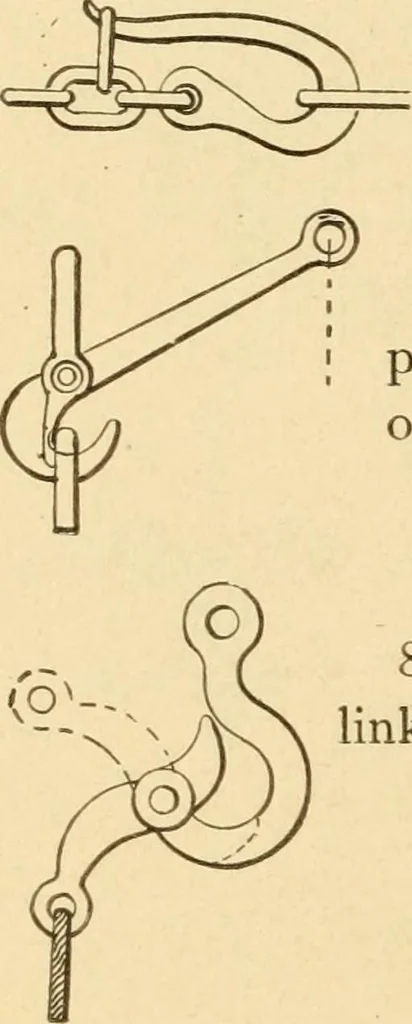
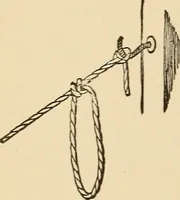
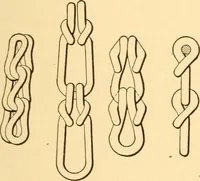
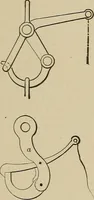
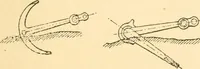
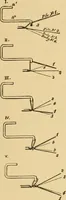
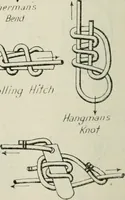
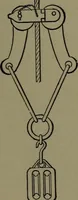
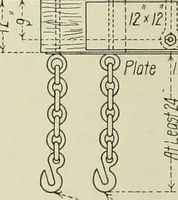
802. DOUBLE KNOT 803. BLACKWALL TACKLE HITCH. 804. FISHERMANS BEND HITCH. 805. ROUND TURN AND HALFHITCH. 806. CHAIN STOP for a cable. … ::^ 807. DISENGAGING HOOK, held by a ^^-^— mousing link. 808. SLIP HOOK.—The extension of the sus-pension link holds the lower link in line, while a pullon the arm by a lanyard releases the load. 809. RELEASING HOOK.—The lever throws thelink off by a pull of the lanyard.
Mechanical movements
Internet Archive · Library of Congress · Public Domain Mark 1.0. Free to use for anything.