Mechanical movements, powers and devices; a treatise describing mechanical movements and devices used in constructive and operative machinery and the mechanical arts, being practically a mechanical dictionary, commencing with a rudimentary description of the early known mechanical powers and detailing the various motions, appliances and inventions used in the mechanical arts to the present time, including a chapter on straight line movements, by Gardner D. Hiscox (1914)
Hiscox, Gardner Dexter, 1822?-1908 · New York, The Norman W. Henley publishing co. · leaf 269
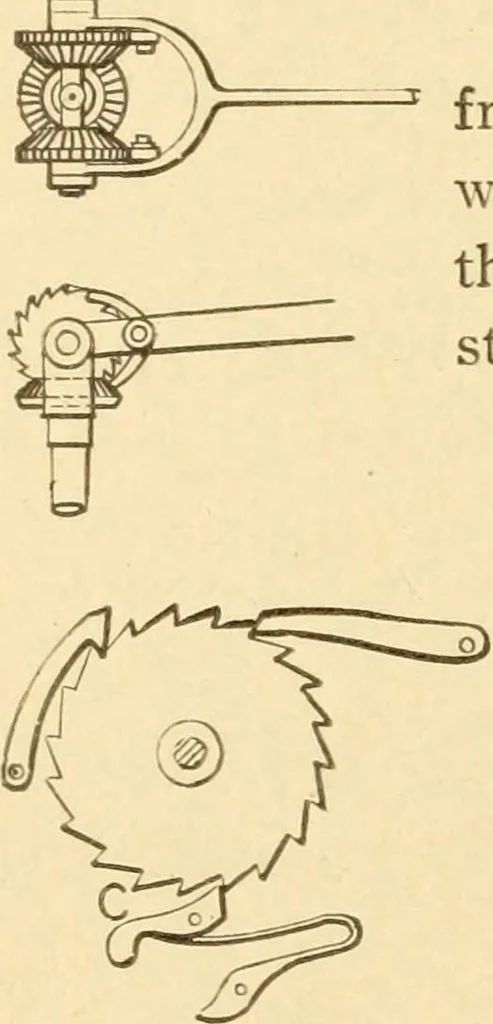
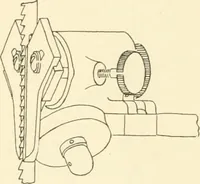
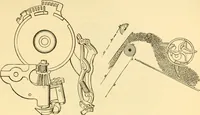
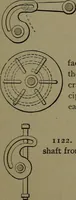
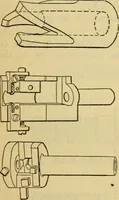
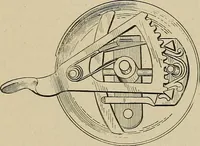
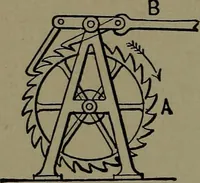
I02I. BALL SOCKET RATCHET.—The3 pawl is within the arm socket, and by the ballratchet form allows the drill stock to be used atan angle. … I022. CONTINUOUS MOTION RATCHET ^ from an oscillating arm. Three bevel gears, two of which have ratchets with pawls on opposite sides, so that there is a forward motion to the spindle at each stroke of the arm. 1022 a. Elevation. 1023. STOPS OF VARIOUS FORMS fora ratchet wheel. Hook and straight…
Mechanical movements
Internet Archive · Library of Congress · Public Domain Mark 1.0. Free to use for anything.