Mechanical movements, powers and devices; a treatise describing mechanical movements and devices used in constructive and operative machinery and the mechanical arts, being practically a mechanical dictionary, commencing with a rudimentary description of the early known mechanical powers and detailing the various motions, appliances and inventions used in the mechanical arts to the present time, including a chapter on straight line movements, by Gardner D. Hiscox (1914)
Hiscox, Gardner Dexter, 1822?-1908 · New York, The Norman W. Henley publishing co. · leaf 288
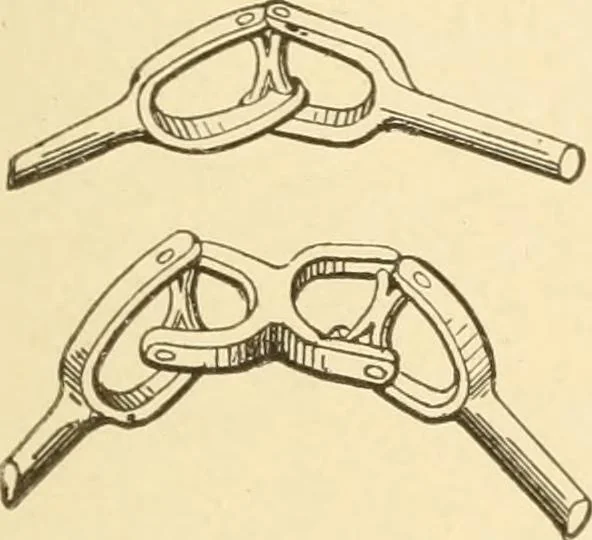
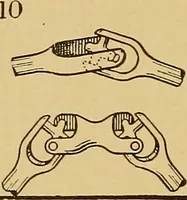
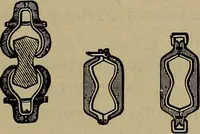
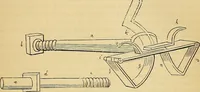
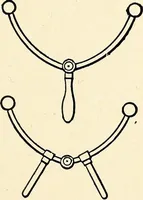
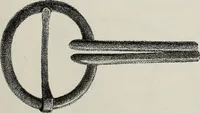
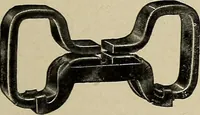
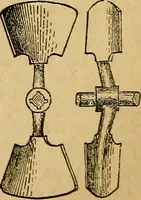
1131. ANGULAR SHAFT COUPLING for shafts out of line. The solid sleeve blockC is bored at the same angle of the shafts,and centres of bores at a dis-tance apart equal to the dif-, ference in the plane of shaftalignment. … 1132. UNIVERSAL JOINT, with a singlecross link. Good for angles of 45** and under. 1133. DOUBLE LINK UNIVERSALJOINT, good for larger angles than above.The connecting link may be made short andguarded, with a sleeve to prevent kinking.
Mechanical movements
Internet Archive · Library of Congress · Public Domain Mark 1.0. Free to use for anything.