Mechanical movements, powers and devices; a treatise describing mechanical movements and devices used in constructive and operative machinery and the mechanical arts, being practically a mechanical dictionary, commencing with a rudimentary description of the early known mechanical powers and detailing the various motions, appliances and inventions used in the mechanical arts to the present time, including a chapter on straight line movements, by Gardner D. Hiscox (1914)
Hiscox, Gardner Dexter, 1822?-1908 · New York, The Norman W. Henley publishing co. · leaf 318
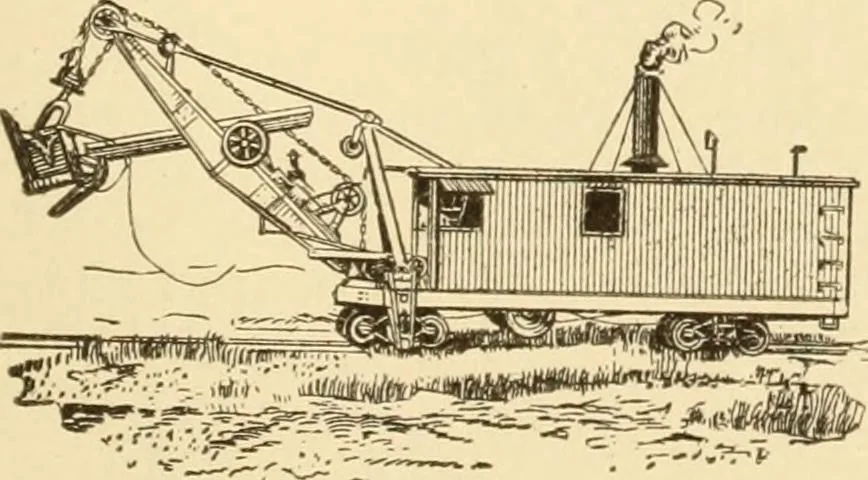
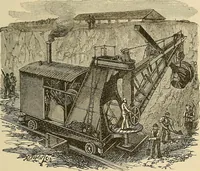
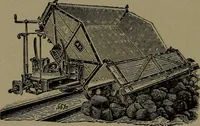
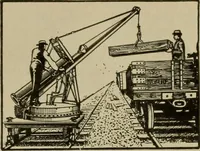
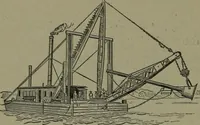
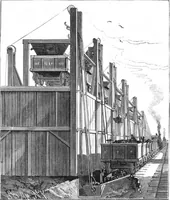
1248. IRON ORE SEPARA-TOR, Buchanan model. Thepulverized ore is fed from a hop-per to a revolving drum, a sectionon each side of which is magne-tized by a fixed electro-magnet.The magnetic particles are carriedaround by the drum to a part ofthe neutral section and discharged.An apron below,… … 1249. RAILWAY STEAMSHOVEL, the Bucyrus model.For railway or other excavating onmovable trucks. 3o8 MINING.
Mechanical movements
Internet Archive · Library of Congress · Public Domain Mark 1.0. Free to use for anything.