Mechanical movements, powers and devices; a treatise describing mechanical movements and devices used in constructive and operative machinery and the mechanical arts, being practically a mechanical dictionary, commencing with a rudimentary description of the early known mechanical powers and detailing the various motions, appliances and inventions used in the mechanical arts to the present time, including a chapter on straight line movements, by Gardner D. Hiscox (1914)
Hiscox, Gardner Dexter, 1822?-1908 · New York, The Norman W. Henley publishing co. · leaf 343
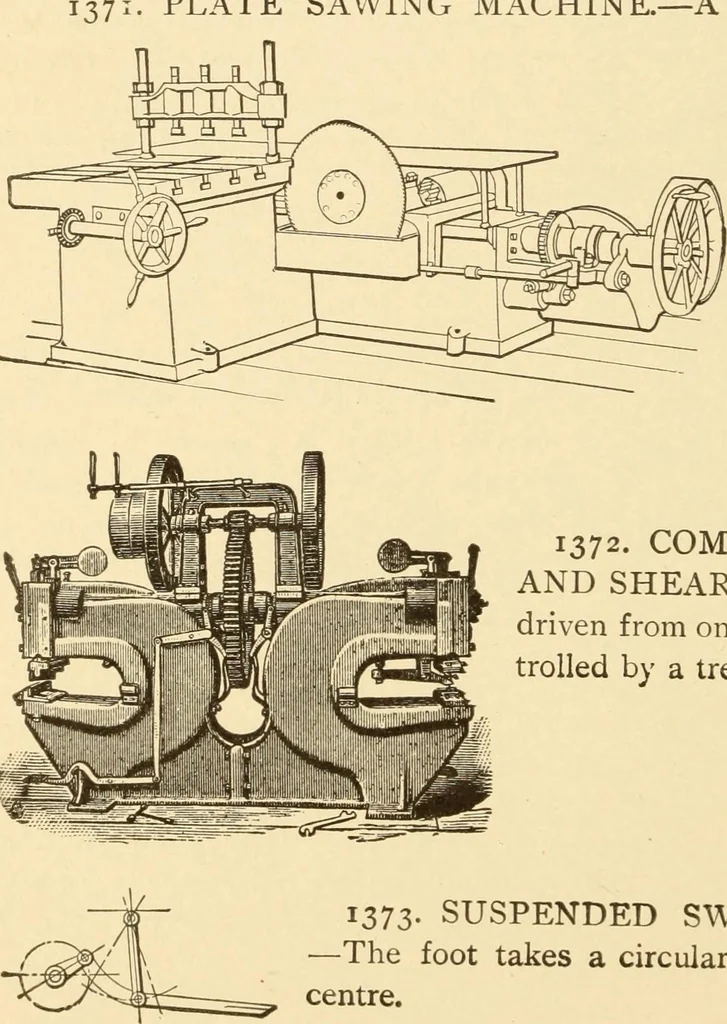
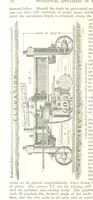
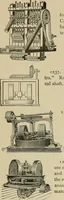
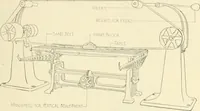
PLATE SAWING MACHINE.—A slow-running steel saw blade lubri-cated by dippingin an oil box. Thesaw is automatical-ly fed to the plateby a worm gear,but has a quickreturn by the handwheel. … 1372. COMBINED PUNCHAND SHEARS in one frame anddriven from one shaft. Each con-trolled by a treadle. 1373. SUSPENDED SWING TREADLE.—The foot takes a circular motion; no deadcentre. MILL AND FACTORY APPLIANCES. 333
Mechanical movements
Internet Archive · Library of Congress · Public Domain Mark 1.0. Free to use for anything.