Mechanical movements, powers and devices; a treatise describing mechanical movements and devices used in constructive and operative machinery and the mechanical arts, being practically a mechanical dictionary, commencing with a rudimentary description of the early known mechanical powers and detailing the various motions, appliances and inventions used in the mechanical arts to the present time, including a chapter on straight line movements, by Gardner D. Hiscox (1914)
Hiscox, Gardner Dexter, 1822?-1908 · New York, The Norman W. Henley publishing co. · leaf 68
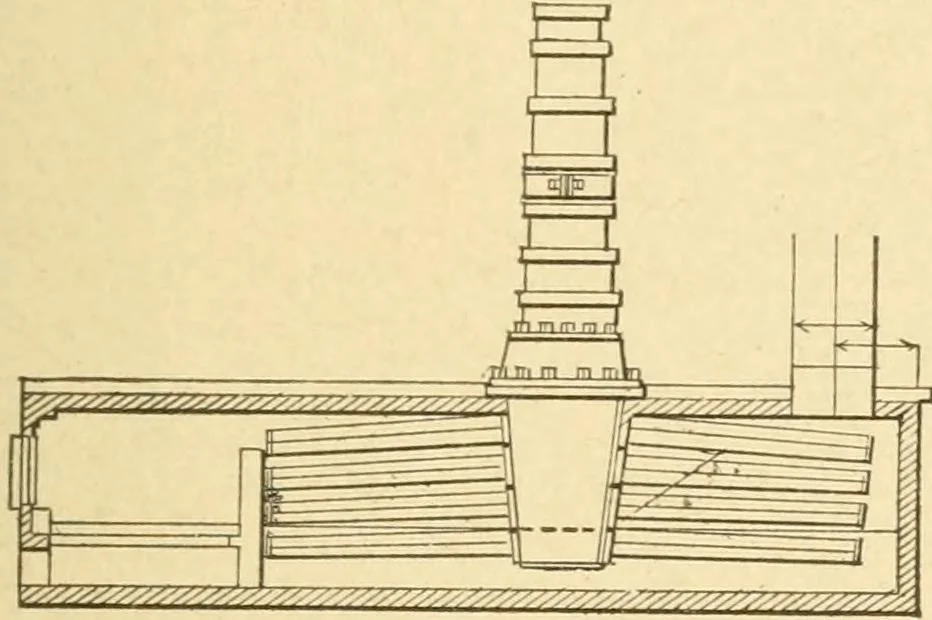
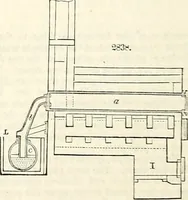
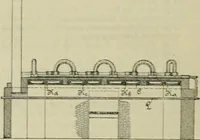
tiating the timegives the velocity of the wind inmiles per hour. The ratio of thewind velocity to the center of thecup velocity is usually about 3 to I. 171^. ELECTROSTATICVOLTMETER FOR MEASUR-ING PRESSURES.—An electro-static voltmeter is shown herewith.In this form the meter is con-structed to… … 172. STEVENS BOILER.— An early type of tubular boilers(1806). The principle is still in use- ?^ H H
Mechanical movements
Internet Archive · Library of Congress · Public Domain Mark 1.0. Free to use for anything.