Wells, Samuel R. (Samuel Roberts), 1820-1875 · New York, Fowler and Wells · leaf 160
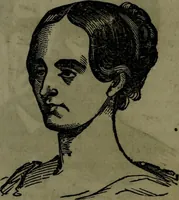
gh this is not necessarily alwaysthe case, for reasons explained in Chapter III., Sections VIII.and IX. Both the facial sign of Love and its corresponding phreno-logical organ were enormous in Aaron Burr (fig. 174), and hischaracter is well known to have corresponded with his devel-opments. The… … in the most prolific races of men we find the chin as well asthe cerebellum most prominent. Take the Irish, the Germans,and the Scotch for exam-ples. The same is true ingeneral of the Anglo-Sax-ons. On the other hand,the Chinese, the Malays,and the Hindoos, who aremuch less prolific, have…
Physiognomy · Phrenology
Internet Archive · Library of Congress · Public Domain Mark 1.0. Free to use for anything.