New Physiognomy : or signs of character, as manifested through temperament and external forms, and especially in the "the human face divine." (1889)
Wells, Samuel R. (Samuel Roberts), 1820-1875 · New York : Fowler & Wells · leaf 154
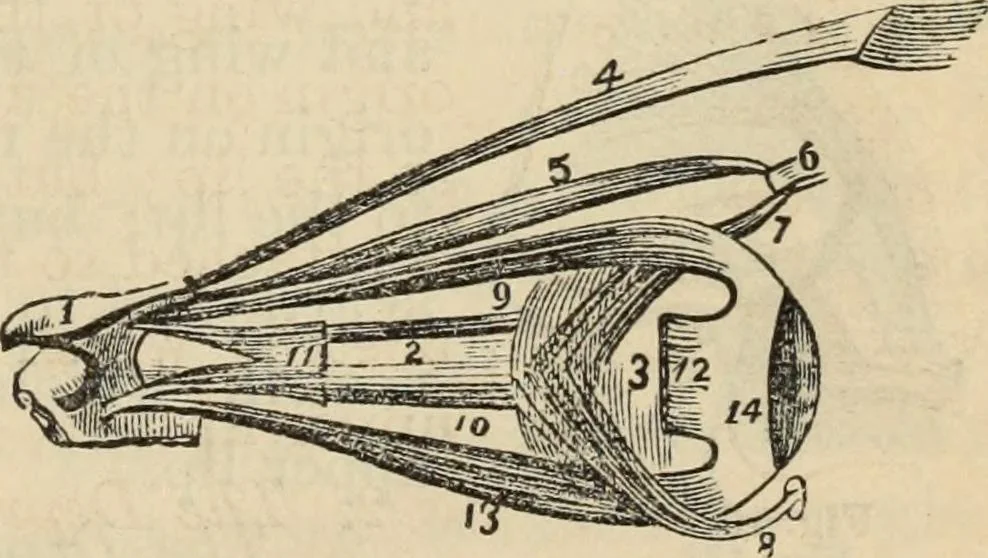
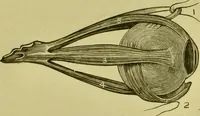
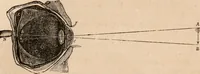
g. 167, ■*) is the mus-cle which raises the upper eyelid, acting in opposition to theorbicularis. It arises deepwithin the orbit, and is at-tached to the cartilagewhich gives firmness tothe upper eyelid. It islong, thin, and triangular. 2. The Rectus Superior(fig. 167,^) arises with thepreceding,… … Fig. 167.—Muscles of the Eye. 148 ANATOMY OF THE FACE. the lower surface of the globe, which i s office is to drawdownward. 4. The Rectus Internus (fig. 167, ^) is a short thick musclearising from the common tendon and sheath of the optic nerA e(fig. 167, ^), Avhich almost conceals it in our…
Physiognomy · Phrenology
Internet Archive · Public Domain Mark 1.0. Free to use for anything.