New Physiognomy : or signs of character, as manifested through temperament and external forms, and especially in the "the human face divine." (1889)
Wells, Samuel R. (Samuel Roberts), 1820-1875 · New York : Fowler & Wells · leaf 171
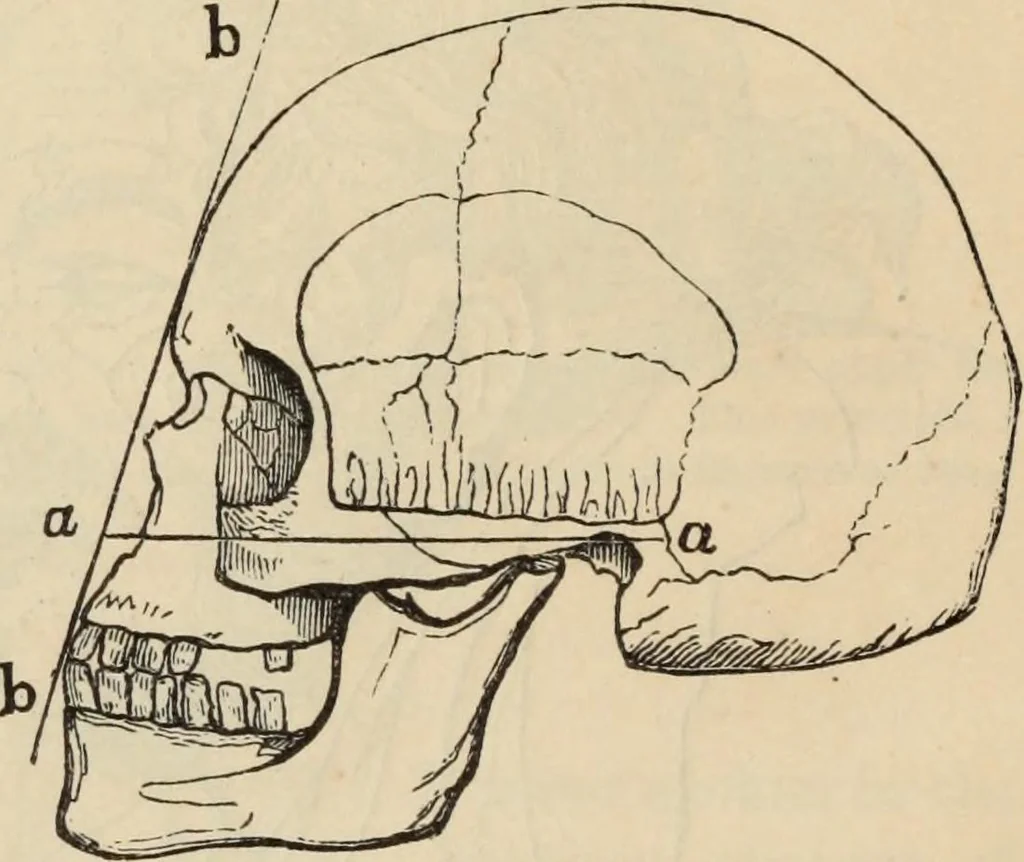
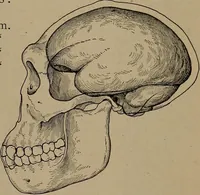
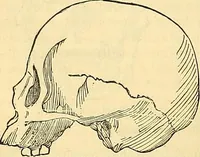
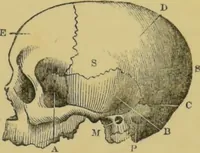
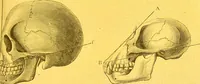
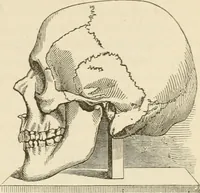
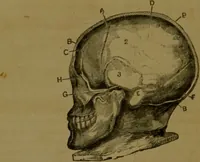
\> .tTjiiarwijjifc- rig. 200.—Head of a Wolf. Fig. 201.—Head op a Shuiep. must necessarily be a form of jaw corresponding to theseactions. In the lion, the wolf, and all carnivorous animals, 164 THE JAWS AND TEETH. … Fig. 202.—Skull of a Neqeo. much of the character of the face hes in the depth of the jawforward, because this depth is necessary for the socketing ofthe long canine teeth. When, on the contrary, the jaw isdeep and strong toward the back part, it is for the firm sock-eting of the grindingteeth, and…
Physiognomy · Phrenology
Internet Archive · Public Domain Mark 1.0. Free to use for anything.