New Physiognomy : or signs of character, as manifested through temperament and external forms, and especially in the "the human face divine." (1889)
Wells, Samuel R. (Samuel Roberts), 1820-1875 · New York : Fowler & Wells · leaf 198
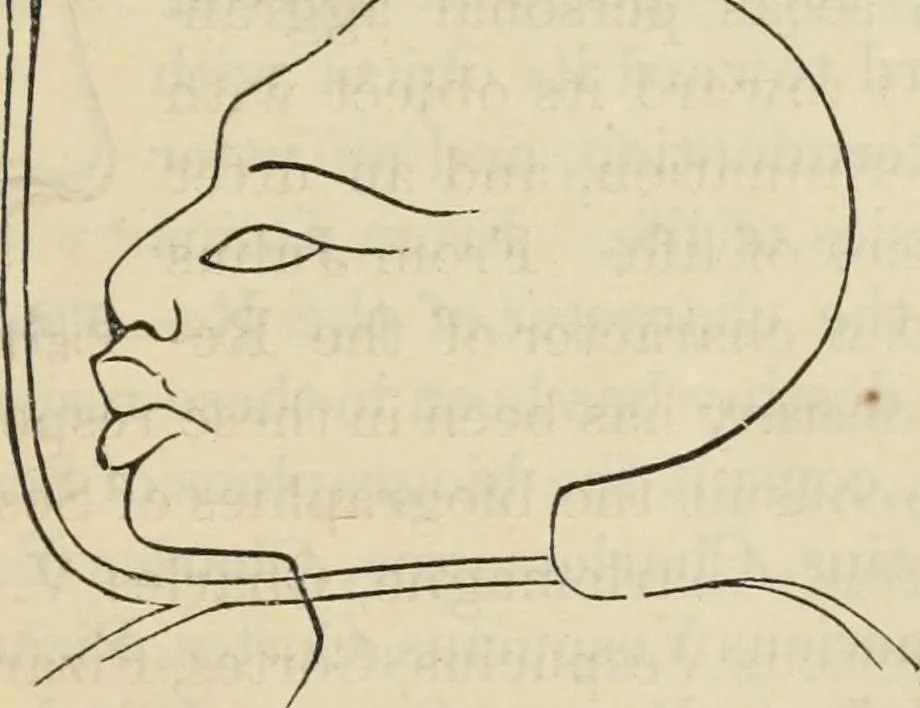
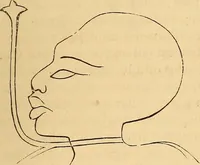
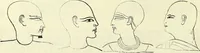
nfancy, and the mass of the people are uneduca-ted, the features, receiving no impression from within, take the form impressed from without, and follow the national^V^ type. Perhaps no nation ^ f ^ ~~^^-\ displays a more universal dead level and generalsameness than the snu1>nosed Chinese. Their… … Fig. 260.—An Egyptian Negro. to the Mandarin, is a father, and must be obeyed withoutquestion or demur. A people thus treated as children mustever remain in a state of infancy, and bear about in theirnoses the sign of their weakness and dependence. NOSES CLASSIFIED. Koses have been variously…
Physiognomy · Phrenology
Internet Archive · Public Domain Mark 1.0. Free to use for anything.
![An illustration from Annual exhibition [electronic resource] : no jury, no prizes (1917)](https://img.insideoutlibrary.com/img/200/ia-bml-31072001519406-136-101.webp)