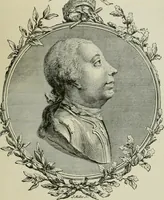
New Physiognomy : or signs of character, as manifested through temperament and external forms, and especially in the "the human face divine." (1889)
Wells, Samuel R. (Samuel Roberts), 1820-1875 · New York : Fowler & Wells · leaf 20
y—The Practical Religionist—The Theolo-gian— Sartor Resartus—The Great Prussian Page 6G5-727 CHAPTER XL. INTERESTING MISCELLANEOUS ADDENDA. Aristotle -An Ideal Head—Head of St Paul—Eyebrows—Life as Seen fromOpposite Stand-points- Physiognomical Anecdotes 729-738 CHAPTER XLI. A BRIEF RECAPITULATION… … ^N its most generalsense, Physiognomy(from cpvcfig, nature, and ^VOdfJLOVIXOcr, know ing) signifies a knowl-edge of nature; butmore particularly ofthe foTTTis of things—the configuration ofnatural objects, whe-ther animate or inani-mate. As restricted in itsapplication to man, itmay be defined as…
Physiognomy · Phrenology
Internet Archive · Public Domain Mark 1.0. Free to use for anything.