Carhart, Henry S. (Henry Smith), 1844-1920 · Boston : Allyn and Bacon · leaf 32
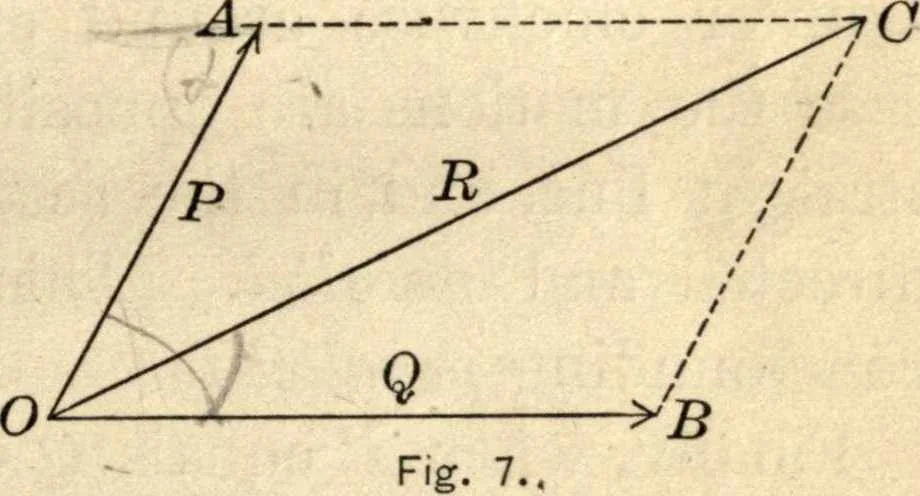
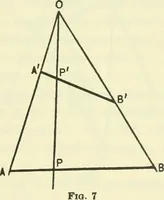
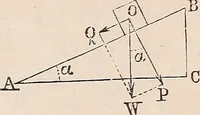
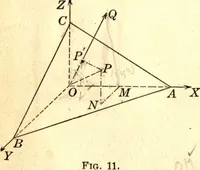
of the resultantmotion is the geometrical sum of the magnitudes of the component motions. 2O. Given Two Motions and the Angle between them,to find their Resultant. —Let the two given motions, A P and Q, be representedby the lines OA and OBrespectively (Fig. 7) ; andlet A OB be the given angle6.… … Substituting the values of the lines, and remembering thatthe angle A is the supplement of 6, we have E* = p* + Q* + zp. Q cos 0 . . . (13) or the square of the resultant equals the sum of thesquares of the two components plus twice their productinto the cosine of the included angle. Three…
Physics
Internet Archive · California Digital Library · Public Domain Mark 1.0. Free to use for anything.