The practical astronomer : comprising illustrations of light and colours, practical descriptions of all kinds of telescopes, the use of the equatorial-transit, circular, and other astronomical instruments, a particular account of the Earl of Rosse's large telescopes, and other topics connected with astronomy (1845)
Dick, Thomas, 1774-1857 · London : Seeley, Burnside, and Seeley · leaf 90
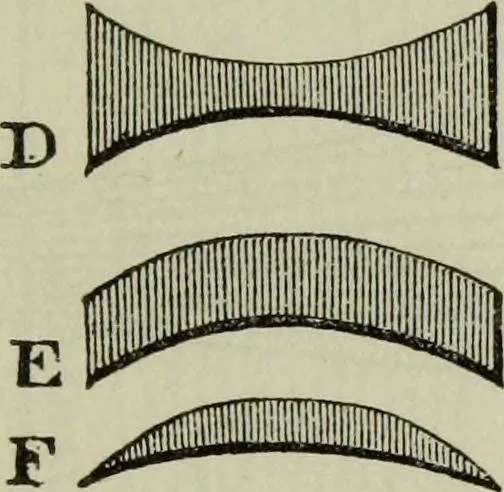
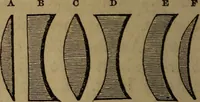
of the radiusof a lens,—as for instance, when we say that alens is two inches or forty inches radius, we mean,that the convex surface of the glass is the part ofa circle the radius of which, or half the diameteris two inches or forty inches ; or in other words,were the portion of the sphere on… … Double Concave. Meniscus.Concavo-convex. The axis of a lens is a straight line drawnthrough the center of its spherical surface; andas the spherical sides of every lens are arches ofcircles the axis of the lens would pass throughthe centre of that circle of which its sides aresegments. Rays are…
Astronomy · Astronomical instruments · Telescopes
Internet Archive · Getty Research Institute · Public Domain Mark 1.0. Free to use for anything.