The practical astronomer : comprising illustrations of light and colours, practical descriptions of all kinds of telescopes, the use of the equatorial-transit, circular, and other astronomical instruments, a particular account of the Earl of Rosse's large telescopes, and other topics connected with astronomy (1845)
Dick, Thomas, 1774-1857 · London : Seeley, Burnside, and Seeley · leaf 90
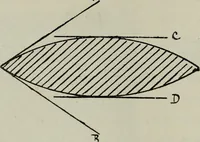
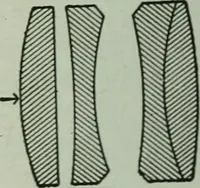
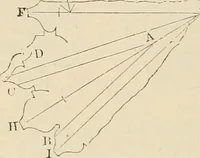
s may proceedfrom a Radiant in different directions. They maybe either parallel, converging, or diverging.Parallel rays are those which proceed equally dis-tant from each other through their whole course.Rays proceeding from the sun, the planets, thestars, and distant terrestrial objects are… … 66 THE PRACTICAL ASTRONOMER. from the object AB, (fig. 7.) to the point F, aresaid to converge towards that point. All convexglasses cause parallel rays, which fall upon them
Astronomy · Astronomical instruments · Telescopes
Internet Archive · Getty Research Institute · Public Domain Mark 1.0. Free to use for anything.