The principles of light and color : including among other things the harmonic laws of the universe, the etherio-atomic philosophy of force, chromo chemistry, chromo therapeutics, and the general philosophy of the fine forces, together with numerous discoveries and practical applications. Illustrated by more than two hundred engravings and four colored plates (1896)
Babbitt, Edwin D. (Edwin Dwight), 1828-1905 · East Orange, N. J., Pub. by the author at the College of Fine Forces · leaf 418
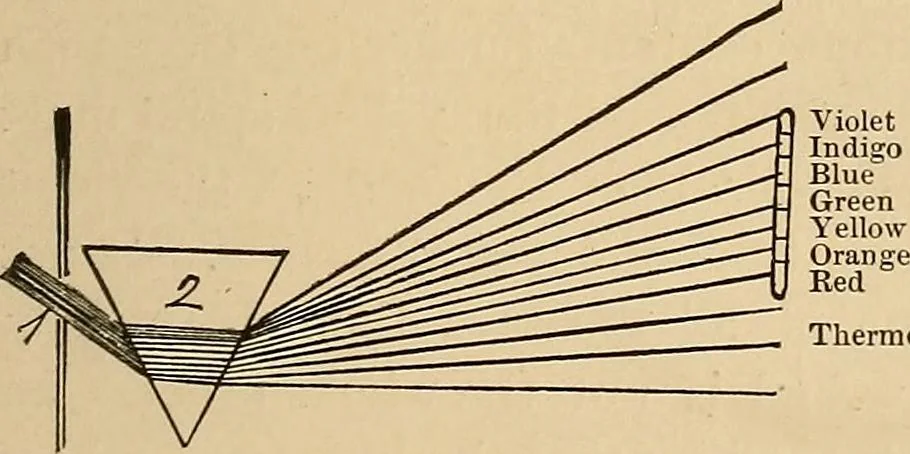
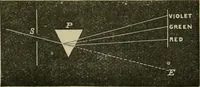
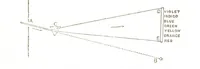
ndividual colors is seen in fig. 173,in which 1 is an aperture to let in a solar beam, 2 is the prismby which it is refracted, while the separated colors from thevisible solar spectrum from red to violet, above and below, which Trans-Violet Rays. Pro-fessor Stokes has traced theseto a distance ten… … Fig. 173. The Spectrum. are the invisible trans-violet and trans-red rays that are manytimes more than the visible. How is it that all the colors arethus shaken apart, the red being refracted the least, and the vio-let the most of the visible rays ? This is very easily understoodif we remember that…
Color
Internet Archive · Clark Art Institute Library · Public Domain Mark 1.0. Free to use for anything.