The principles and practice of harmonious colouring : in oil, water, and photographic colours, especially as applied to photographs on paper, glass, and silver-plate (1859)
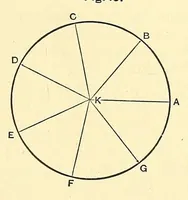
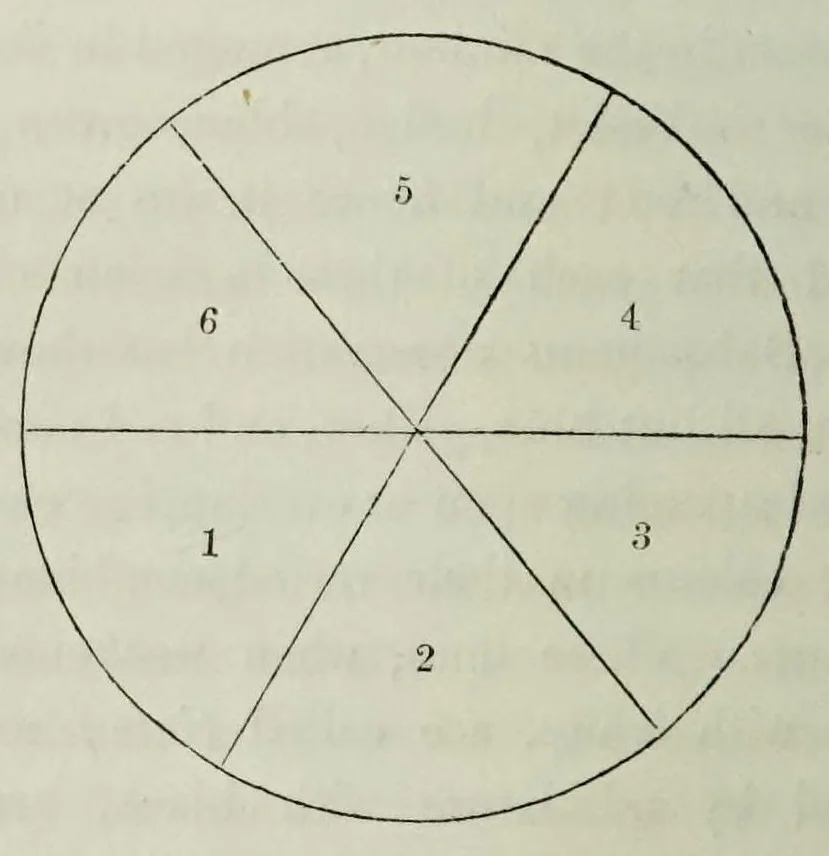
12 THE PRINCIPLES AND PRACTICE OF COLOURING. the mixture of blue and yellow produces green, % which is complementary to red. The mixture of yellow and red produces orange, which is comple¬ mentary to blue. The mixture of red and blue produces purple, which is complementary to yellow. This may be… … Divide a circle into six equal parts, numbered 1, 2, 3, 4, 5, 6, like the diagram. Let the spaces 1, 2, 3 be coloured blue ; 3, 4, 5 yellow ; and 5, 6, 1 red. It will be seen that the space 1 is now coloured purple by the combination of red and blue, and that it is placed opposite to its comple-
Photographs -- Coloring · Color
Internet Archive · Getty Research Institute · Public domain (published before 1931). Free to use for anything.
![An illustration from The star; being a complete system of theoretical and practical astrology ... / The whole illustrated by the nativity of the author ... By Ebn Shemaya [i.e. D. Parkes]. (1839)](https://img.insideoutlibrary.com/img/200/wellcome-wellcome_b22022910-47-1.webp)