A Roman alphabet and how to use it; a conventional Roman alphabet with full directions for its use in the lettering problems required in public, normal, art, and technical schools, and for the lettering problems which arise in the practice of architects, commercial illustrators, show-card writers and sign painters (1917)
Frederick, Frank Forrest, 1866-1942 · Trenton, N.J., F.F. Frederick · leaf 31
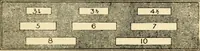
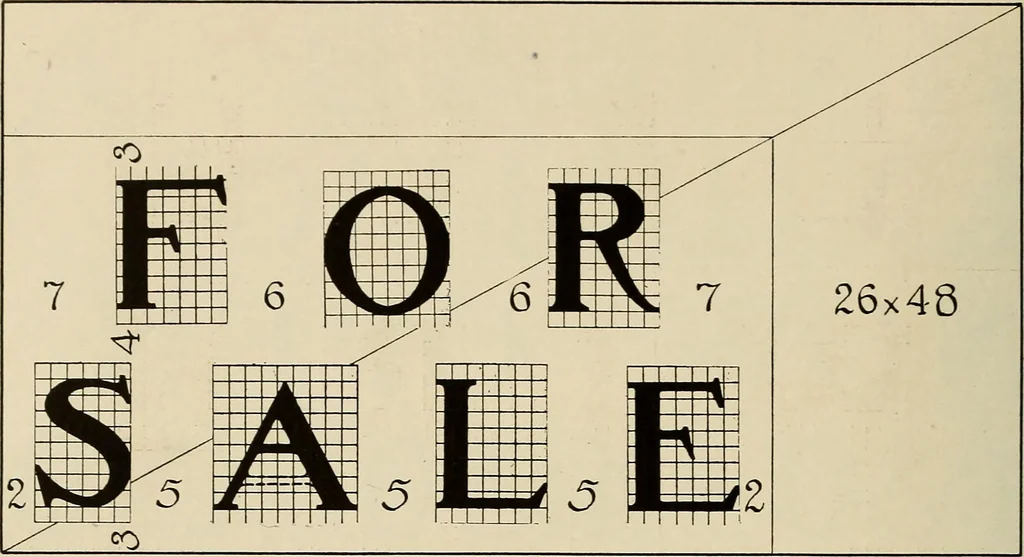
ould be allowed on both sides. The cut-out letters will be found to be most used, not for word com-position, as will be explained later, but simply to learn how many units aword or words requires. As shown in Cut No. 16, they were most helpfulin arranging the last two lines so that they would be of… … No. 17. See page 20. The fact that the composition obtained with the cut-out letters maybe larger or smaller than the desired lettering presents no difficulties.They may be used to study the composition of lettering for rectanglesof given dimensions by composing them in proportionate rectangles. 1.…
Lettering
Internet Archive · Library of Congress · Public Domain Mark 1.0. Free to use for anything.
![An illustration from Divina proportione : opera a tutti glingegni perspicaci e curiosi necessaria oue ciascun studioso di philosophia: prospettiua pictura sculptura: architectura: musica: e altre mathematice: suavissima: sotile: e admirabile doctrina consequira: e delecterassi: co[n] varie questione de secretissima scientia (1509)](https://img.insideoutlibrary.com/img/200/ia-divinaproportion00paci-140-372.webp)