Rudiments of the art of building : represented in five sections [...] for the use of architects, builders, draghtsmen, machinists, engineers and mechanics (1853)
Bullock, John · New York : Stringer & Townsend · leaf 48
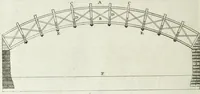
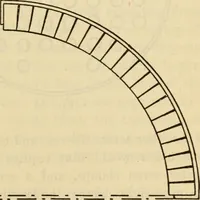
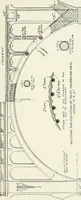
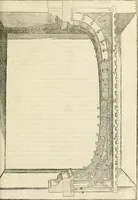
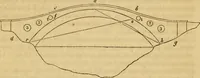
rt of which is in astate of compression, the pressure arising from the weight ofthe arch and its superincumbent load being transmitted tothe abutments on which it rests in a curved line called thecurve of equilibrium, passing through the thickness of thearch. 63. The wedge-shaped stones of which a… … give way by the sliding of the voussoirs on each other ; butin practice the friction of the material and the adhesion ofthe mortar is sufficient to prevent this, and failure takesplace in the case of an overloaded arch by the voussoirsturning on their edges. 64. The curve of equilibrium will vary…
Building
Internet Archive · Getty Research Institute · Public Domain Mark 1.0. Free to use for anything.
![An illustration from Rudiments of the art of building : represented in five sections [...] for the use of architects, builders, draghtsmen, machinists, engineers and mechanics, 1853, leaf 48](https://img.insideoutlibrary.com/img/1024/ia-rudimentsofartof00bull-48-14.webp)
![An illustration from [Electric engineering.] (1902)](https://img.insideoutlibrary.com/img/200/ia-electricengineer02inte-153-64.webp)