The rudiments of practical bricklaying : in six sections : general principles of bricklaying, arch drawing, cutting, and setting, different kinds of pointing, paving, tiling, materials, slating, and plastering, practical geometry, mensuration, etc. (1882)
Hammond, Adam · London : C. Lockwood · leaf 58
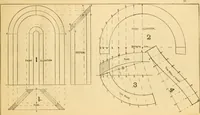
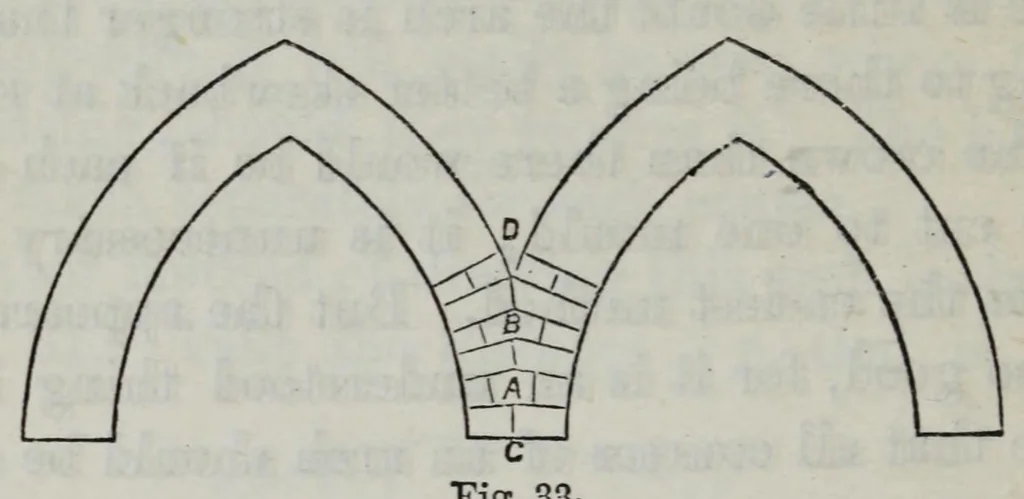
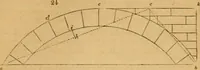
42 BRICKLAYING. manner that each line, a b, c d, shall be in the centre of the course ; or, in other words, that each of these points shall show a key brick, in the same way as one key is shown in the semi- circular arch. Where two or more arches are set close to- gether, saddles ought always to be… … Fig. 33. straight joint from c to d ; for although this is often done, there is no bond between the two arches. In all arch cutting the T bevel is by far the best to use, for by reversing, it frequently answers the purpose of two. MoijLDIXG. It has been already stated that moulding is also included…
Bricklaying · Plastering · Masonry
Internet Archive · Getty Research Institute · Public domain (published before 1931). Free to use for anything.
![An illustration from Works. Popular edition.] 2 series (1886)](https://img.insideoutlibrary.com/img/200/bl-bl_003191336_5-218-1.webp)