Stereotomy : Problems in stone cutting. In four classes. I. Plane-sided structures. II. Structures containing developable surfaces. III. Structrues containing warped surfaces. IV. Structures containing double-curved surfaces. For students of engineering and architecture (1875)
Warren, S. Edward (Samuel Edward), 1831-1909 · New York : J. Wiley and son · leaf 76
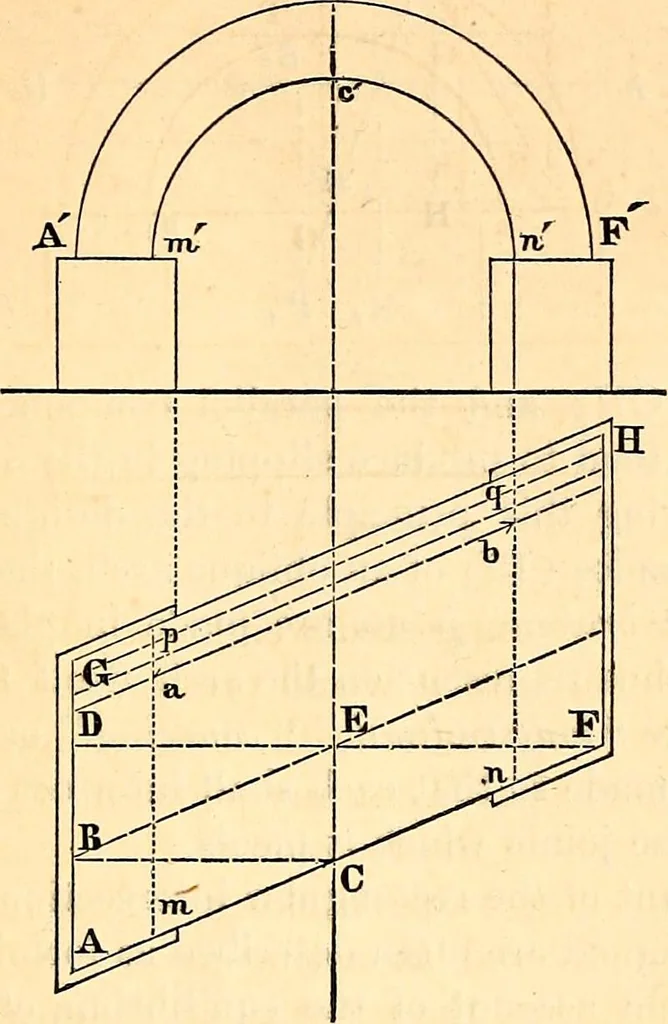
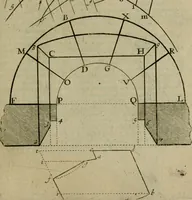
ssing to the oblique arch (25), Fig. 5, it is evidentfrom the foregoing explanations that the portions, ABC andADEC, of the left half, are only more or less imperfectly sup-ported by the opposite half. Hence, in discussing the obliquearch relative to its stability, it is usual to consider it as… … Fig. 5. That is, the thrust lines of pressure or lines of re-sistance in an oblique arch, are assumed to act in planesparallel to its faces. The resulting standard or essentially perfect design for anOblique Arch. 63. The conclusion of the last topic affects the form anddisposition of the joints of…
Stereotomy
Internet Archive · UNC Libraries · Public Domain Mark 1.0. Free to use for anything.