The textile fibres of commerce. A handbook on the occurrence, distribution, preparation, and uses of the animal, vegetable, and mineral fibres used in cotton, woollen, paper, silk, brush, and hat manufactures (1902)
Hannan, William I · London : C. Griffin · leaf 42
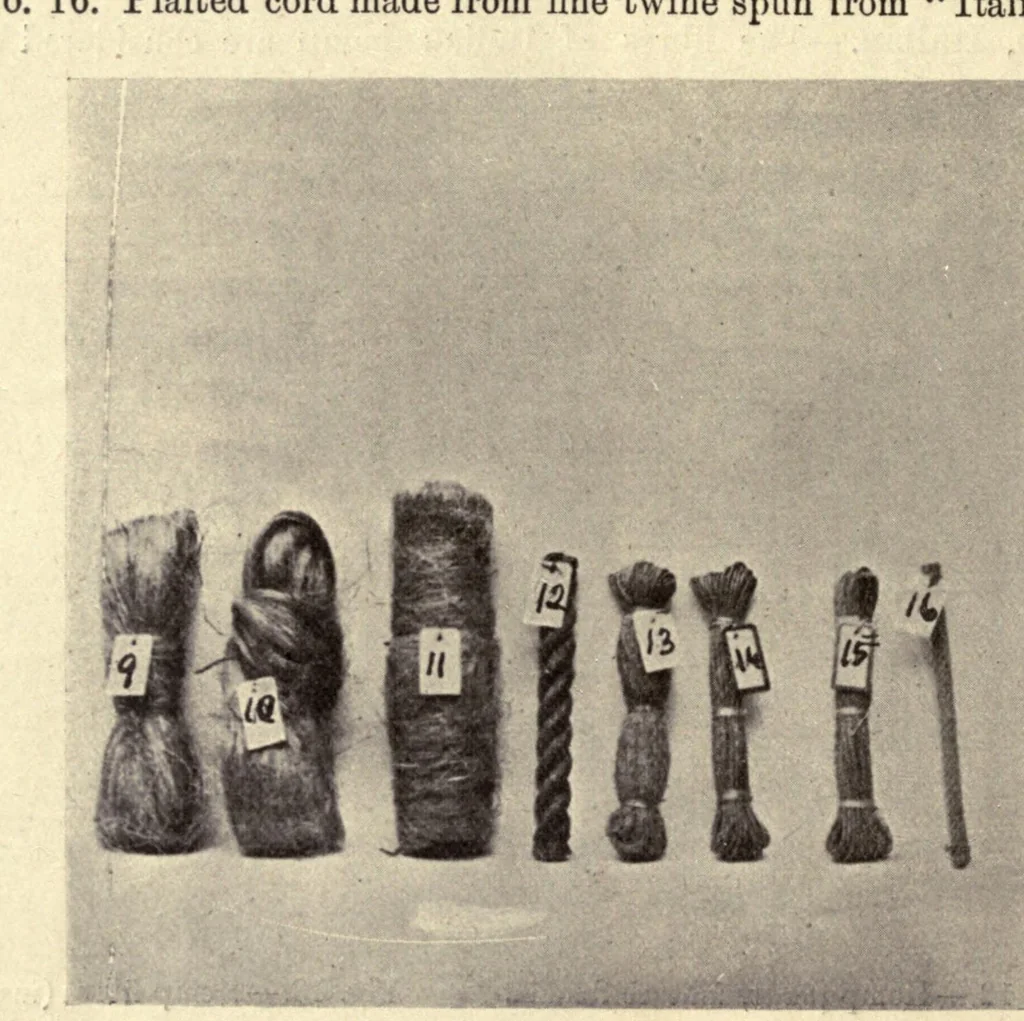
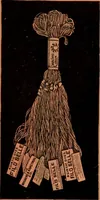
olour, but are very strong, and resemble at first sight newly stacked hay. No. 2 is the same Russian hemp after it has been dressed or heckled. The fibres are now more pliable, more uniform in width and general appearance, and are now designated Russian Line. No. 3 are the waste fibres from No. 1 ;… … Fig. 15. — Hanks of Russian hemp. brownish appearance is due to the tarring process it has been put through to render the yarn more durable in use. No. 5 is a tarred yarn spun from Russian Line intended mainly for " ships' purposes " ; it is well twisted, solid, with a deep marked screw line. No. 6…
Textile fabrics
Internet Archive · University of California Libraries · Public domain (published before 1931). Free to use for anything.