The textile industries : a practical guide to fibres, yarns & fabrics in every branch of textile manufacture, including preparation of fibres, spinning, doubling, designing, weaving, bleaching, printing, dyeing and finishing (1910)
Murphy, William S · London : The Gresham Publishing Company · leaf 110
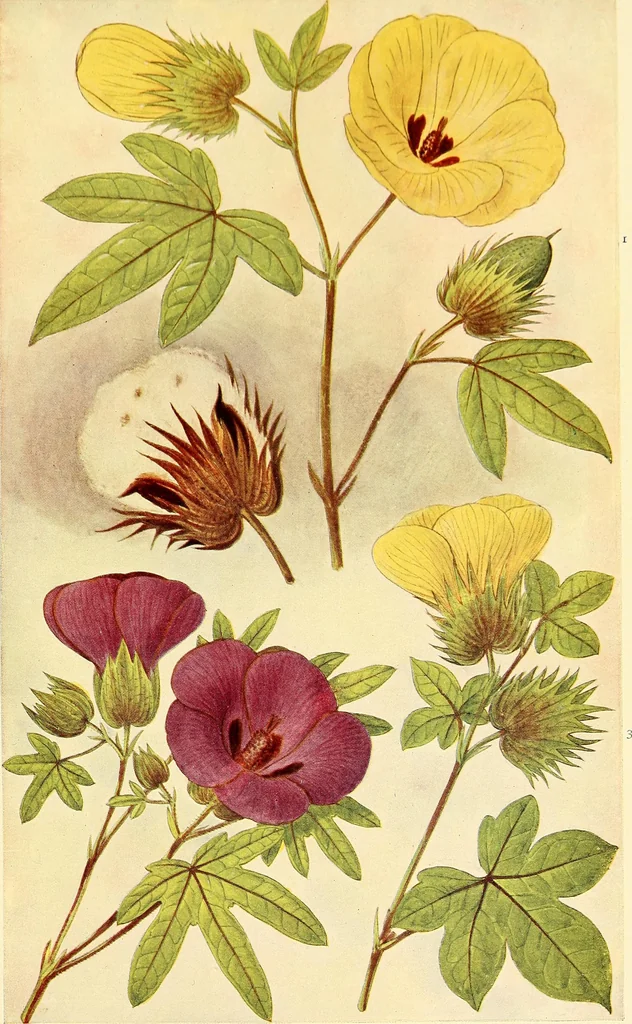
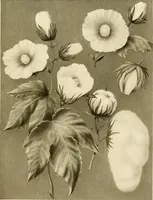
and the stem is ligneous.The trees continue fruitful for ten years. Cultivated largely in Peruand Brazil, the tree has been introduced into Egypt and the WestIndies. (a) Brazil.—On the cotton belt of Brazil—extending several hundredmiles from north to south, and about 150 miles broad—the G.… … COTTON PLANTSI, Gossypiuin Baibademe, wilh fruit. 2, Gossypium aiboreum. 3, Gossypium herbacewn COTTON 75 counts. The various kinds of fibre take their names from the portsof export. The best known are Pernams, Maceio, Paraiba, RioGrande^ Maranham, Ceara, and Santos, grown from American seed. {b)…
Textile industry · Textile fabrics
Internet Archive · UMass Dartmouth, Claire T. Carney Library · Public Domain Mark 1.0. Free to use for anything.
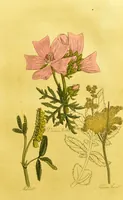
![An illustration from The universal herbal; or, botanical, medical, and agricultural dictionary / [Thomas Green]. (1828)](https://img.insideoutlibrary.com/img/200/wellcome-wellcome_b2201746x-184-1.webp)
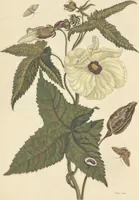
![An illustration from Thirty-eight plates with explanations; intended to illustrate Linnaeus's System of vegetables, and particularly adapted to the Letters on the elements of botany [J.J. Rousseau] / By Thomas Martyn. (1799)](https://img.insideoutlibrary.com/img/200/wellcome-wellcome_b28780450-106-1.webp)